Last updated November 22, 2026
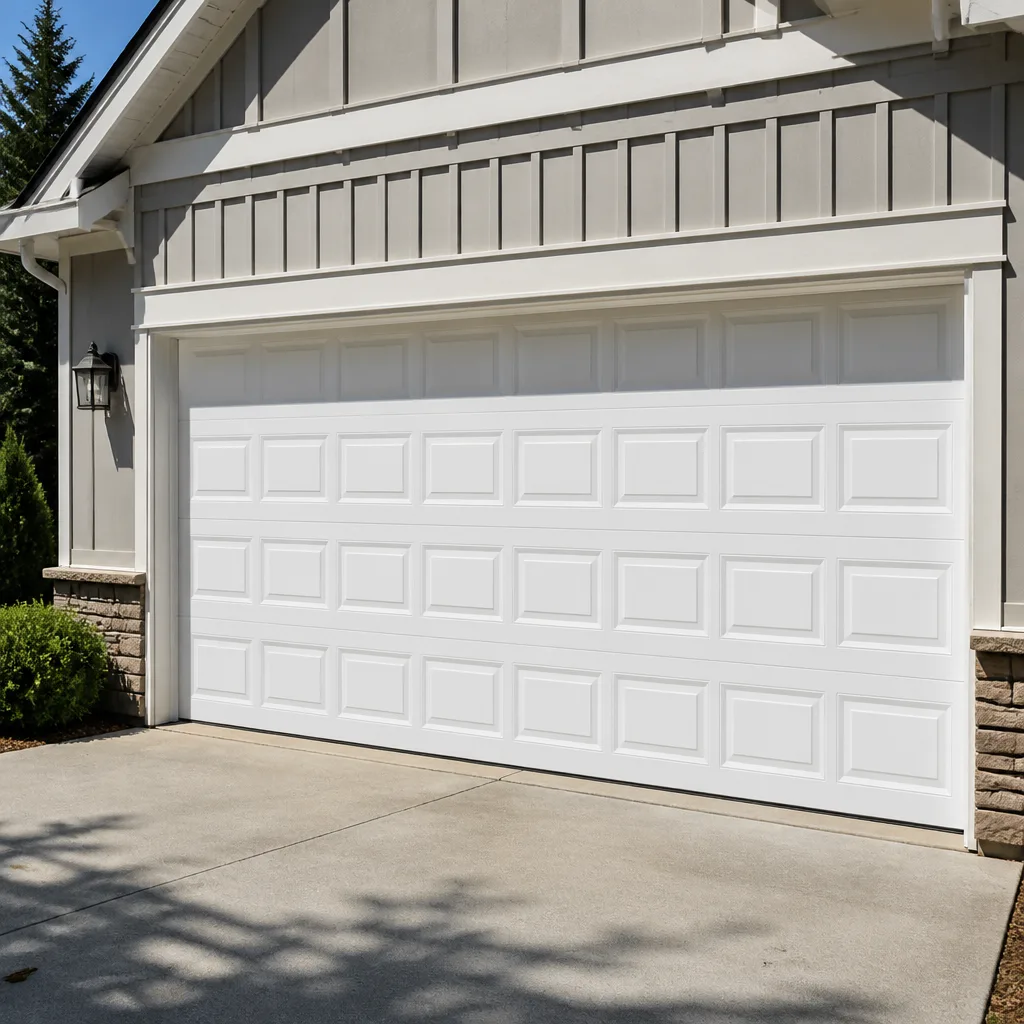 Raised-panel steel
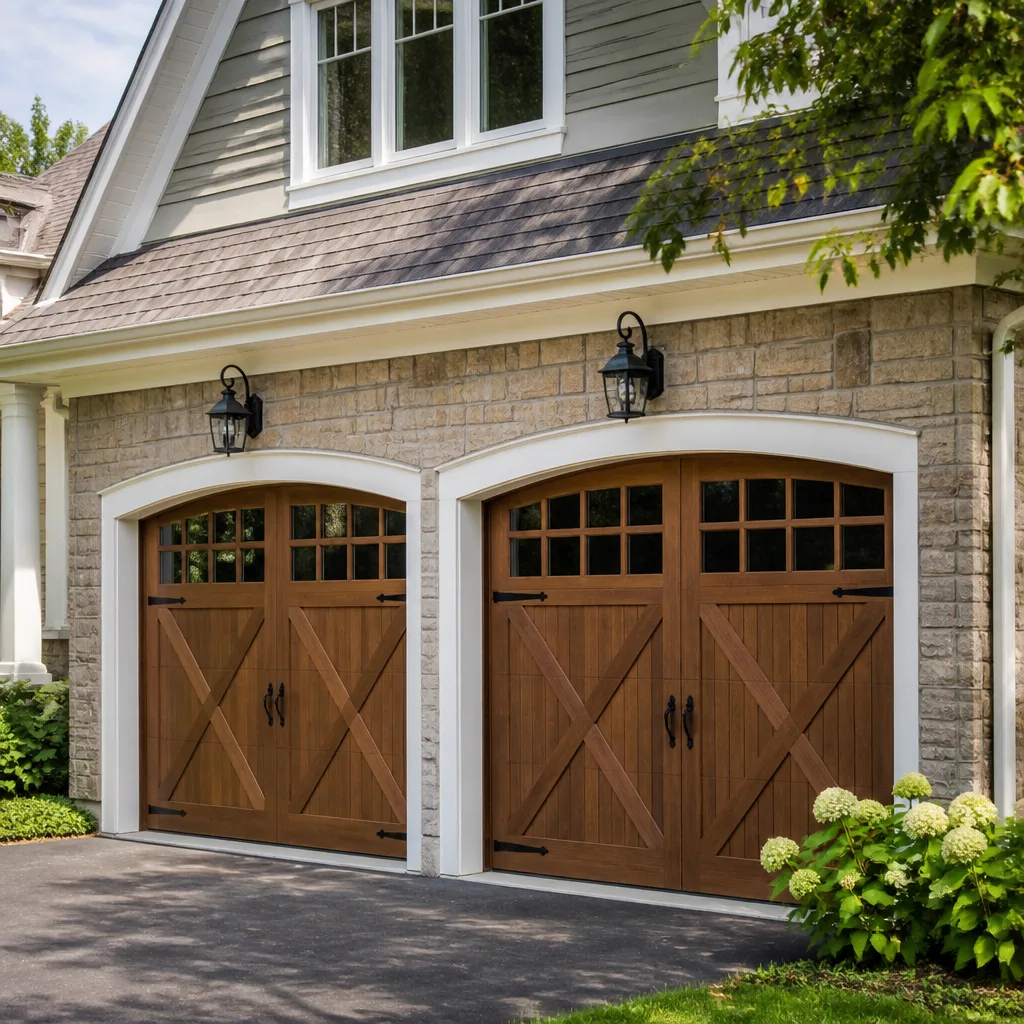 Carriage house
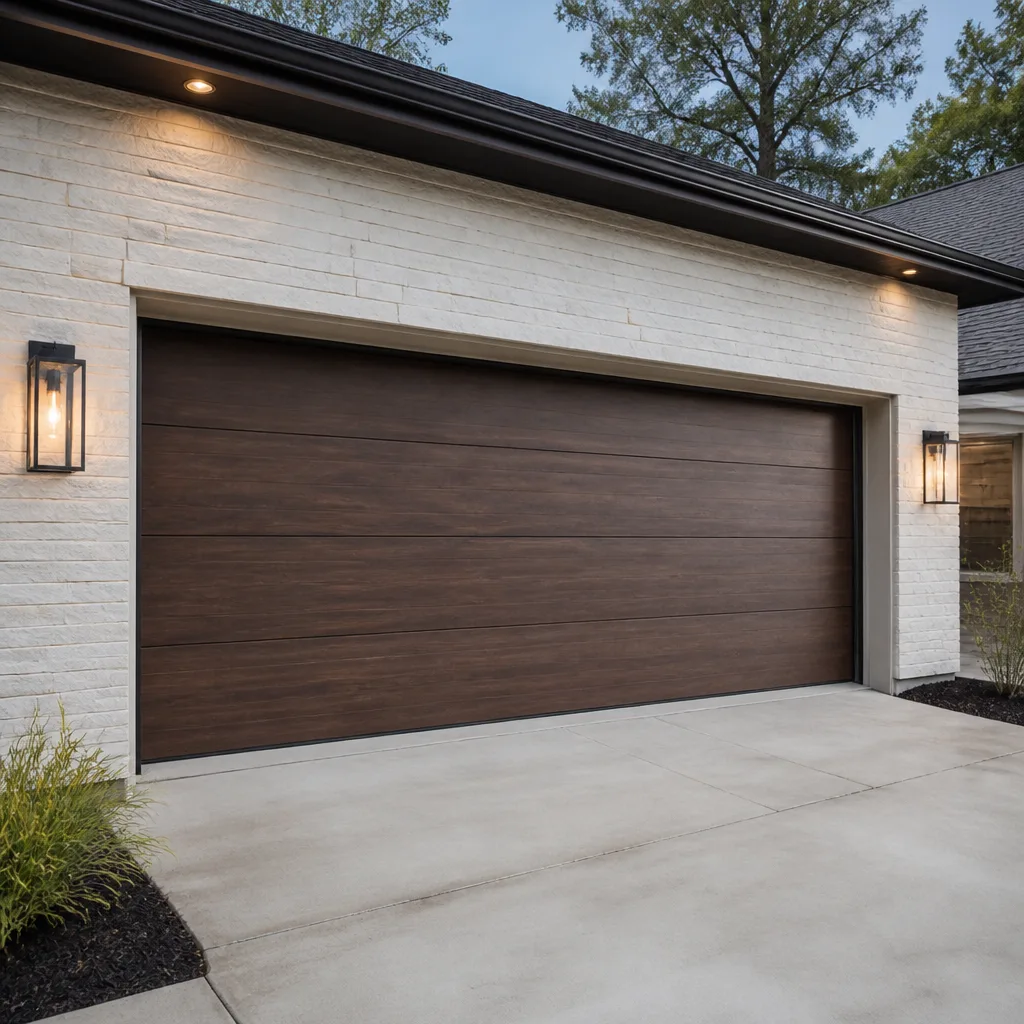 Modern flush
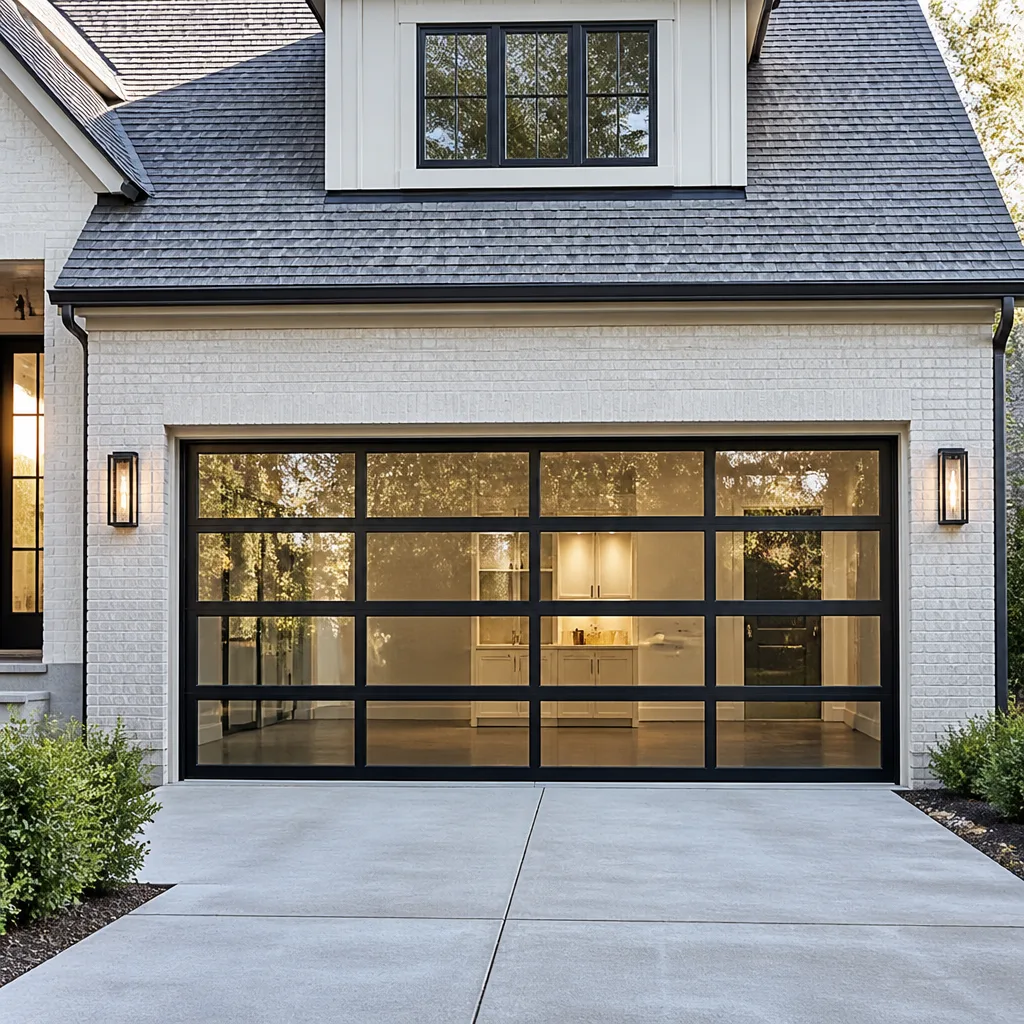 Full-view glass
 LiftMaster openers
 Chamberlain openers
Full 25-point door and opener safety check with every visit - springs, cables, rollers, tracks, and your LiftMaster or Chamberlain opener included
You get a price before we start. It does not change when the pro arrives.
Get your free estimateGarage Door Warning Signs: A Taunton Homeowner’s Reference Guide
A door that takes one second longer to open than it did six months ago isn’t “just getting older.” It’s telling you something specific about your springs or your opener motor, and that information is worth acting on now, not at 7 a.m. on a morning when the door won’t budge and the car is trapped inside. Most garage door failures announce themselves weeks in advance through small, easy-to-miss shifts in sound, speed, and alignment. The trouble is that homeowners in Taunton are trained to ignore slow changes, because a door that still opens, even sluggishly, doesn’t feel like an emergency yet. This guide reframes warning signs as diagnostics: each symptom points to a component, and each component has a timeline. By the end, you’ll know what grinding, squeaking, and popping actually mean, how to time your door’s cycle, how to run a visible asymmetry test, and when to call a professional immediately versus when you have a maintenance window to work with.
Quick Answer
The most common garage door warning signs are a door that opens slower than it used to, grinding or popping sounds during travel, uneven gaps at the corners, a door that reverses before closing, and worn weather seals around the perimeter. Each symptom maps to a specific part – springs, cables, rollers, tracks, or the opener motor – and catching it early usually means a simpler, less expensive fix than waiting for a full failure. In Taunton’s freeze-and-thaw winters and humid summers, these signs tend to show up faster than homeowners expect.
Styles & brands we work with
- Raised-panel steel
- Carriage house
- Modern flush
- Full-view glass
- LiftMaster openers
- Chamberlain openers
Table of Contents
- Sound-to-Cause Diagnostics: What Grinding, Squeaking, Popping, and Rattling Tell You
- The Visible Asymmetry Test: Is Your Door Hanging Level?
- The Response-Time Baseline Method: Timing Your Door’s Cycle
- Weather Seal Deterioration Signs Most Taunton Homeowners Miss
- Spring Strain vs. Opener Strain: Telling the Difference
- How Taunton’s Seasons Accelerate Wear
- When to Call Immediately vs. When You Have a Maintenance Window
Sound-to-Cause Diagnostics: What Grinding, Squeaking, Popping, and Rattling Tell You
Your door’s sound is a diagnostic channel, and most homeowners tune it out entirely. The trick is that different noises come from different components. A door that squeaks isn’t the same problem as a door that grinds, and a door that pops isn’t the same as one that rattles. Learning to separate these four sounds will tell you more about what’s failing than looking at the door ever will.
Here’s how to translate what you’re hearing:
- Grinding usually points to the opener motor or the tracks. If the grind is loudest at the top of the door’s travel, suspect the opener’s drive gear. If it follows the door all the way up and down, suspect a bent track or a roller that’s seized and dragging.
- Squeaking is almost always friction, and friction usually means dry or worn rollers, hinges, or torsion hardware. This is the least urgent sound but the easiest to ignore too long.
- Popping is the sound of something under load letting go in small increments. It can be a spring that’s about to fail, a cable that’s slipping off a drum, or a torsion bar with a loose set screw. Popping deserves attention quickly.
- Rattling is a loose-parts sound: a panel fastener, a bracket, a bolt that’s backed off. It’s usually cheap to fix and risky to ignore, because a rattling bracket can become a falling bracket.
In our experience across Taunton, the two sounds we hear homeowners describe most often are “grinding” and “popping,” and both are the ones people should stop dismissing. A popping spring on a door in Taunton is a real safety issue, and it’s the kind of repair our team handles on its own because so few generalists will touch it. If you hear something new and can’t place it, garage door repair is the correct first step – a technician can usually identify the exact source inside the first few minutes of a visit.
The Visible Asymmetry Test: Is Your Door Hanging Level?
A garage door that hangs even one inch lower at one corner is telling you about spring balance, not aesthetics. This is the single most useful visual test a homeowner can run, and it takes under a minute. Stand inside the garage with the door closed and look at the gap along the top and the two sides. The gap should be roughly uniform all the way around. If one corner sits noticeably lower or one side has an obvious gap where the other doesn’t, that’s a spring balance problem, a cable tension problem, or a track issue – and it’s worth diagnosing before it gets worse.
Here’s a simple way to run it:
- Close the door fully and stand about six feet back, looking at the door straight on.
- Compare the gap along the left and right sides. They should match closely.
- Look at the top edge. It should be level with the header, not tilted.
- Open the door halfway and stop it. Look at the panel edges. The door should remain straight across, not sag in the middle.
- If the door is visibly tilted, or a gap appears at one corner when it’s partway open, stop using it and call for service.
Do not attempt to adjust springs or cables yourself. Garage door springs are under enormous tension, and a spring that lets go can cause serious injury. This is the one part of any garage door system that genuinely demands a trained technician. Our team approaches every balance issue on a Taunton door as a spring-and-cable diagnosis first, because that’s where the cause usually lives. If the door is also making noise, garage door spring repair is the natural next call.
The Response-Time Baseline Method: Timing Your Door’s Cycle
The best way to catch an opener problem before it burns out is to time your door’s full open-and-close cycle once, then repeat the timing every few months. Most homeowners never do this, which is why opener problems tend to show up as sudden failures rather than slow declines. A typical door takes somewhere in the range of 15 to 30 seconds to fully open, depending on door size and opener model. The number itself matters less than whether it changes.
Here’s the method:
- Stand clear of the door and use a stopwatch on your phone. Time a full open cycle from the moment you press the button to the moment the door reaches the top.
- Time a full close cycle the same way.
- Write both numbers down, with the date, somewhere you’ll remember.
- Repeat the timing once a month. A door that suddenly takes several seconds longer than its baseline is straining.
- Pair the timing with a sound check. If the timing has grown and the door sounds strained at the top of travel, the opener motor is working harder than it should.
Strain shows up as a door that opens fine but slows near the top, a door that hesitates before reversing, or a door that reverses for no visible reason. All three point toward the opener working against resistance – typically a spring that’s lost tension or rollers that have stiffened. A Craftsman or LiftMaster opener will usually protect itself by reversing, which is useful but also means the strain can go unnoticed for a while. If your timing test shows a pattern, garage door opener repair is where to start, and a diagnosis will tell you whether the opener itself needs work or whether the door is the real culprit.
Weather Seal Deterioration Signs Most Taunton Homeowners Miss
Weather seals fail quietly, and most homeowners never notice because they look at the door rather than the perimeter. The bottom seal, the side jambs, and the top seal all sit where you aren’t looking during a normal day, and by the time you do notice, you’ve had a winter or two of cold air and moisture getting in. In Taunton, where winters swing between freezing and thawing, a worn bottom seal lets meltwater pool under the door and freeze again, which stresses the panel edges and the floor contact.
Signs your seals need attention:
- A visible gap between the bottom seal and the floor, especially after the door has sat closed overnight.
- The bottom seal feels stiff, cracked, or brittle when you press it. New rubber feels springy.
- Daylight visible along the sides or top when the door is closed.
- Water or a damp line on the garage floor right at the door’s edge after rain or snowmelt.
- Cold air rushing in along the bottom when the door is closed and the wind is up.
- The seal has pulled away from the door frame in one spot and hangs loose.
Seal problems rarely need a full door replacement. They usually need a new bottom seal, sometimes new side and top weatherstripping, and occasionally a small adjustment to how the door sits against the frame. But because seal symptoms overlap with balance and track symptoms, it’s worth having someone check the perimeter along with the door itself. In Taunton homes, we see the same pattern year after year: the seal fails first, then the bottom panel gets wet, then the bottom panel becomes the repair.
Spring Strain vs. Opener Strain: Telling the Difference
Two failures masquerade as each other constantly: a failing spring and a failing opener. Both make the door feel heavy. Both make the door slow. Both can cause a door to stop mid-travel. The difference matters because the repair is completely different, and homeowners who guess wrong often replace an opener when the real problem was a spring all along. Learning to separate them will save you from an unnecessary repair.
A quick way to tell them apart:
- Spring strain usually shows as a door that feels noticeably heavier when you lift it by hand with the opener disengaged, a door that hangs at one corner, or a door that opens slowly but evenly.
- Opener strain usually shows as a door that travels at normal speed but the motor sounds labored, a door that reverses unexpectedly, or a door that opens fine on one cycle and struggles on the next.
- Both failing at once is common when a spring has been weak for a while and the opener has been compensating for months. The opener wears out in the process.
For safety, we don’t recommend testing a spring under load yourself. The disengage-and-lift check is simple in concept, but the moment you’re under a door with a weakened spring, you’re in the danger zone. Have a technician run the check. On Wayne Dalton and Raynor doors we typically see the spring wear pattern in a certain way, and on Clopay and Amarr doors we often see a different wear pattern, which is one reason brand familiarity matters in diagnosis. A generalist who works on one or two brands a year will guess. A specialist who works across eight brands every week will know.
How Taunton’s Seasons Accelerate Wear
Garage door hardware doesn’t wear evenly through the year. It wears hardest when temperature swings. Taunton sees freezing winters, warm and often humid summers, and shoulder seasons that swing back and forth within a single week. That swing is what does most of the damage, especially to springs, seals, and the metal tracks.
What tends to happen across the year:
- Late fall into winter: cold contracts the track slightly, and a track that was already marginal can bind. Springs stiffen, and a spring that’s near end-of-life often fails in the first hard cold snap.
- Deep winter: bottom seals stiffen and lose their seal, letting cold air and moisture in. Rollers stiffen. Doors that sit closed for days may stick to the floor seal on first lift.
- Spring thaw: meltwater gets under the bottom seal, and the freeze-thaw cycle stresses the door panel’s lower edge. Popping or groaning sounds often show up around this time.
- Summer: heat and humidity swell wood components and soften rubber seals. Rollers may squeak more. Doors that were fine in winter may drop slightly out of level as the wood expands unevenly.
This is one reason a seasonal check is worth more than a single annual check. A quick look at the perimeter, a timing test, and a listen to the door in late fall and again in early spring catches most problems before they become repairs. If a door has been sitting through a Taunton winter untouched, the first warm week is the best time to have it looked at.
When to Call Immediately vs. When You Have a Maintenance Window
Not every warning sign is an emergency, and not every warning sign can wait. Getting this triage right is the difference between a small repair and a door that’s stuck shut, or worse, a spring that lets go while someone is underneath it. Here’s how to separate the two.
Call immediately if:
- The door is visibly tilted, or a corner has dropped noticeably out of level.
- You hear popping from the spring area, or the door won’t stay up when lifted by hand.
- A cable has visibly come off a drum or looks slack.
- The door reverses, stops mid-travel, or won’t close fully.
- The door is stuck open or stuck closed and you can’t secure it.
You have a maintenance window if:
- The door works normally but squeaks or rattles.
- The door is a few seconds slower than baseline but otherwise consistent.
- The bottom seal shows wear and daylight is visible, but the door closes and holds.
- Rollers look worn or dry, but the door still travels smoothly.
If you’re on the fence, lean toward calling. A technician can tell you in minutes whether the door needs work today or can be scheduled, and the visit is far cheaper than a failure. In Taunton, our team handles emergency calls and scheduled maintenance the same week, and we carry the parts knowledge for LiftMaster, Chamberlain, Genie, Clopay, Amarr, Wayne Dalton, Craftsman, and Raynor systems, so a diagnosis doesn’t stall while someone sources parts. If the door is the only way in and out of your house or the only way your car gets out, treat it as urgent even if it’s still moving.
Common Mistakes to Avoid
- Ignoring a one-second slowdown. A door that opens one second slower than it did six months ago is telling you about a spring or opener strain. Waiting for a full failure means you’re paying for an emergency repair plus a possible opener replacement.
- Greasing everything. Not all garage door parts need lubricant, and the wrong grease attracts grit that grinds down rollers and tracks. Ask a technician which parts actually need it before you reach for the can.
- Testing a spring by hand. Lifting a door with a weakened spring and no opener engaged puts you directly under a high-tension component. Let a technician do it.
- Replacing the opener when the spring is the problem. A new opener bolted to a failing spring will fail within weeks. Diagnose the door before diagnosing the motor.
- Looking only at the door, not the perimeter. Bottom seals and side weatherstripping are where Taunton’s freeze-thaw damage usually starts. Look at the gaps, not just the panels.
- Calling a generalist for a spring. Springs are the part of the trade most generalists avoid or underdiagnose. Use a company that lists spring repair as a standalone service, not a side job.
- Waiting for the “right time” when the door is stuck. A door stuck open is a security problem, and a door stuck closed is an access problem. Either way, that’s an emergency call, not a scheduled one.
See the difference
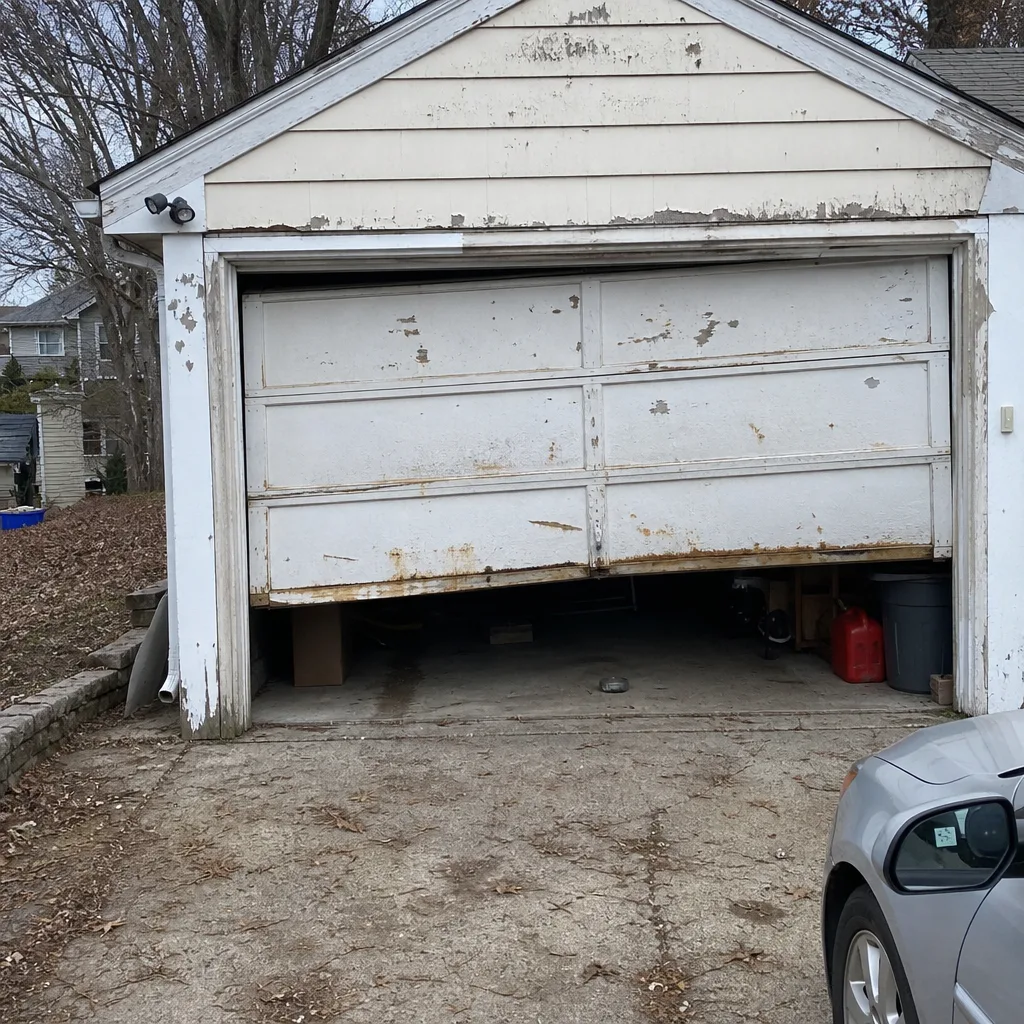 Before
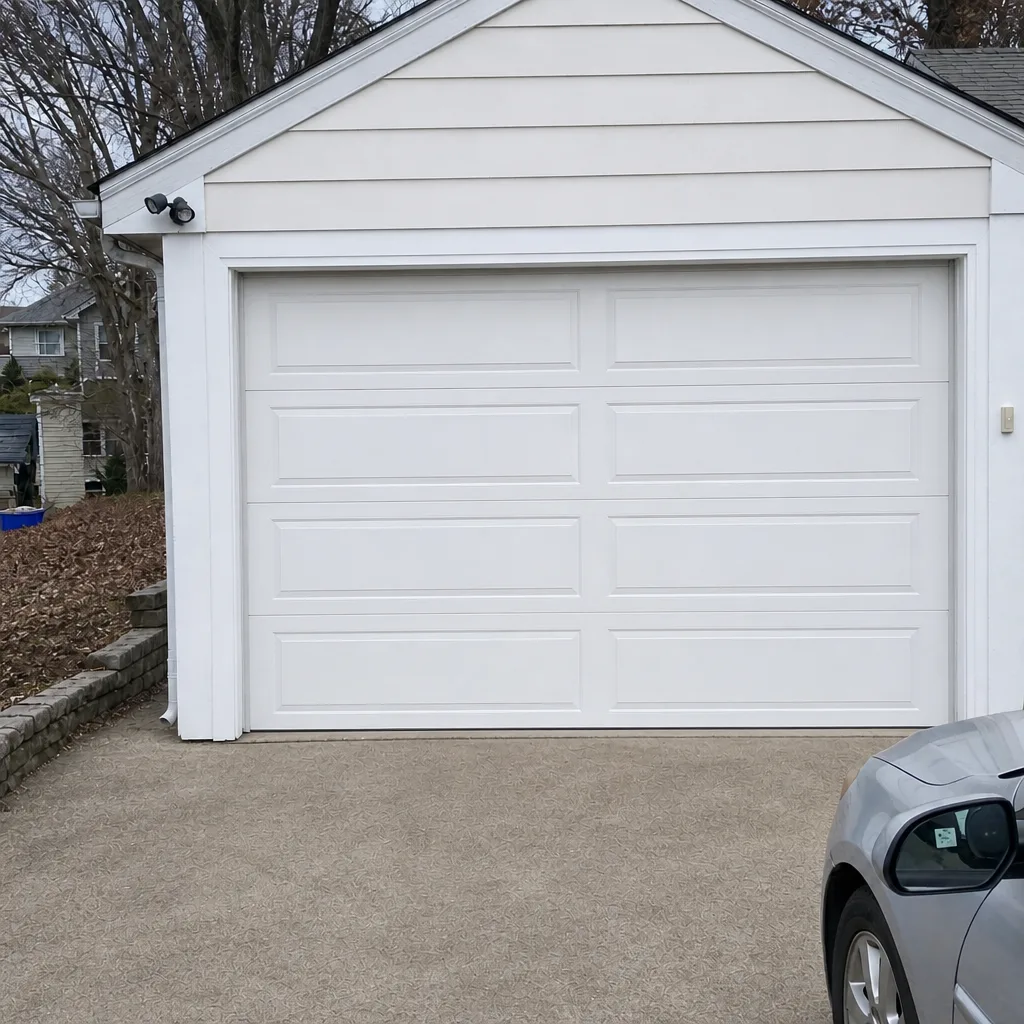 After
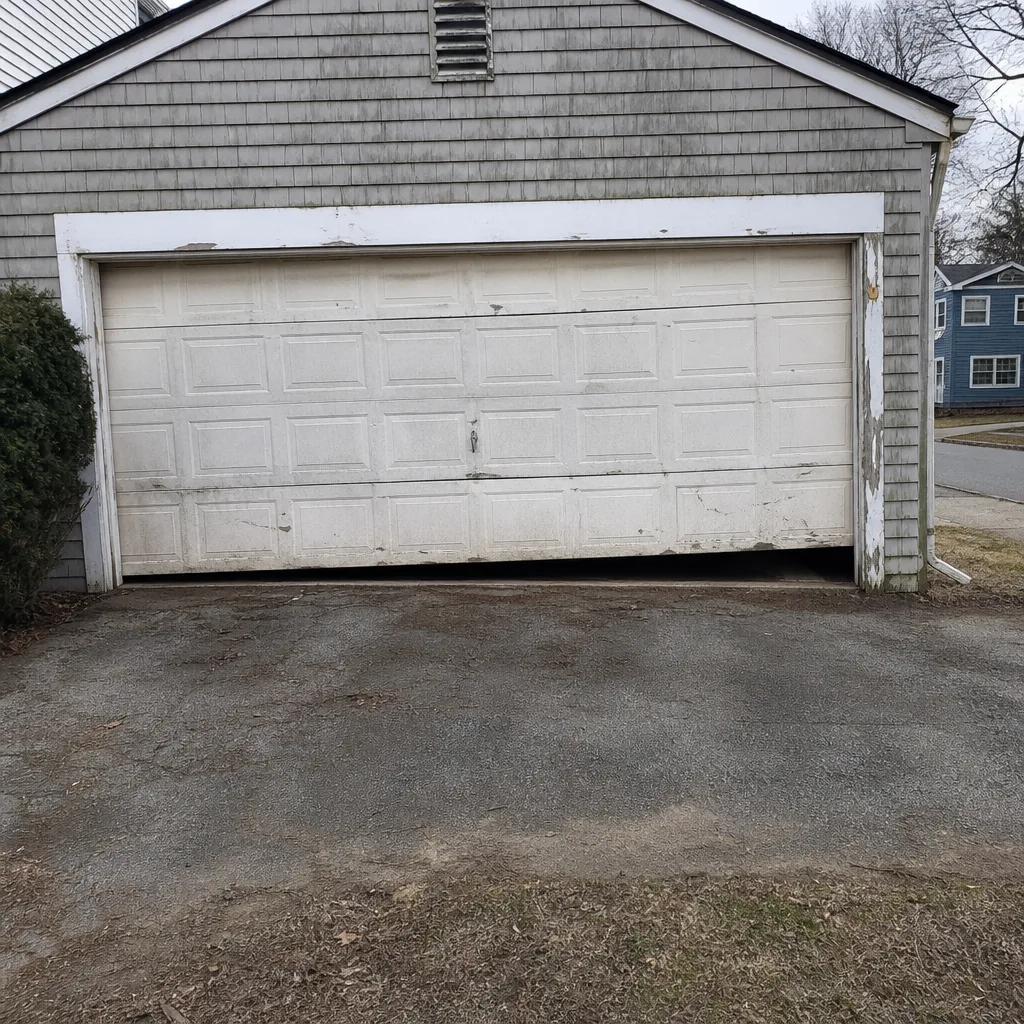 Before
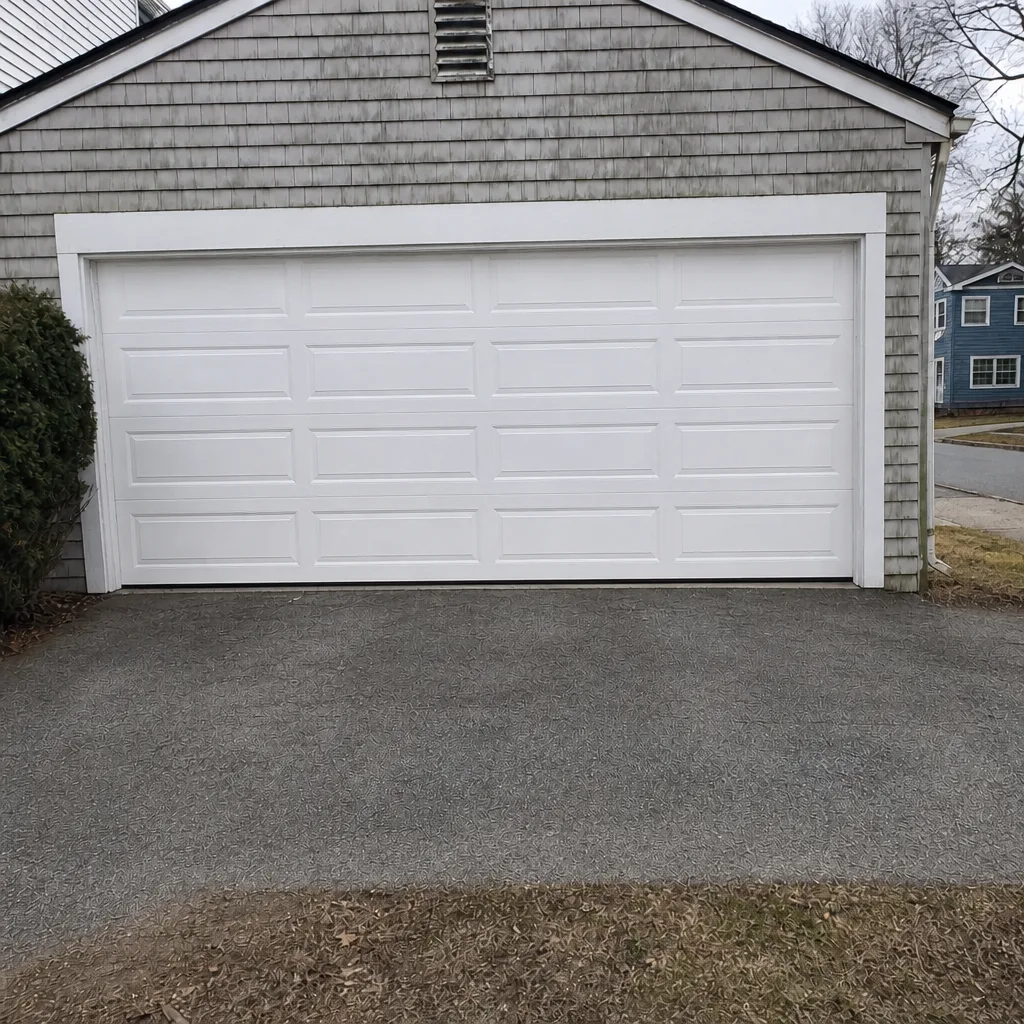 After
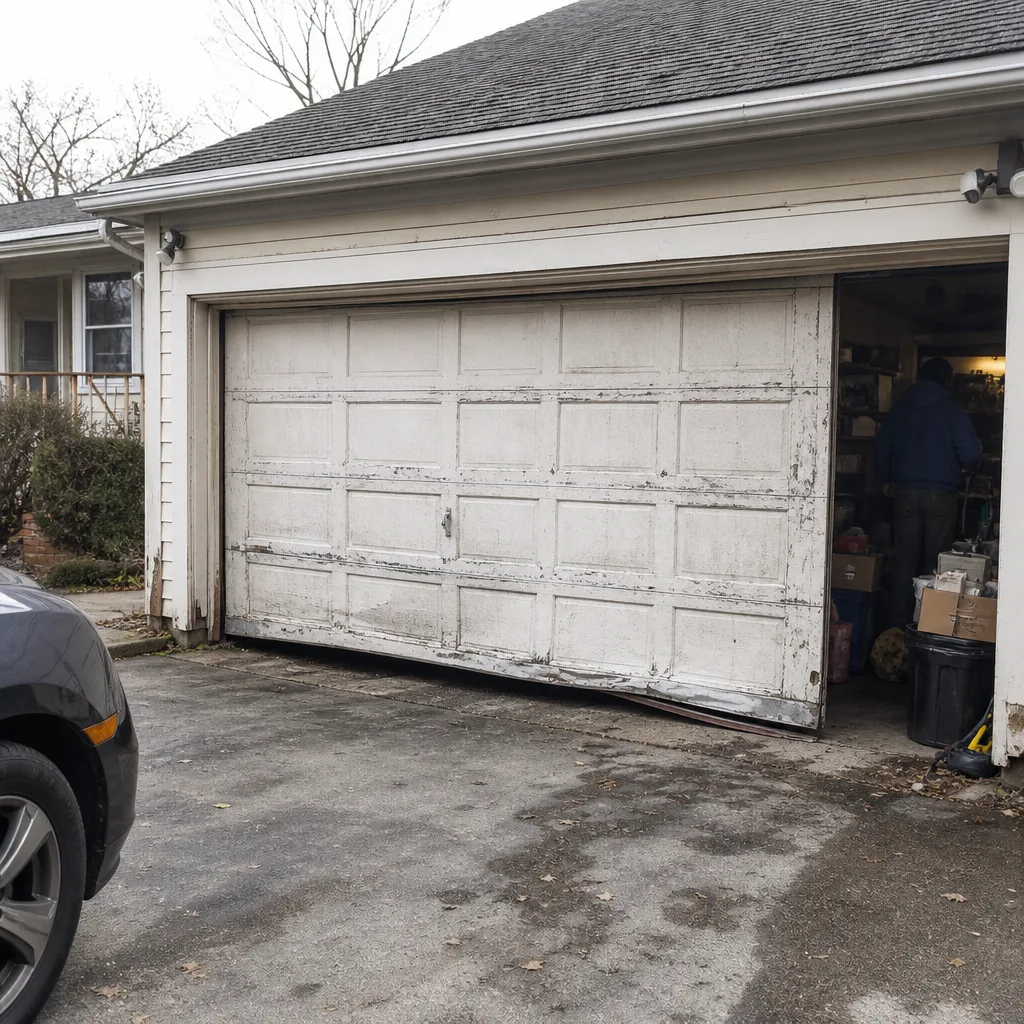 Before
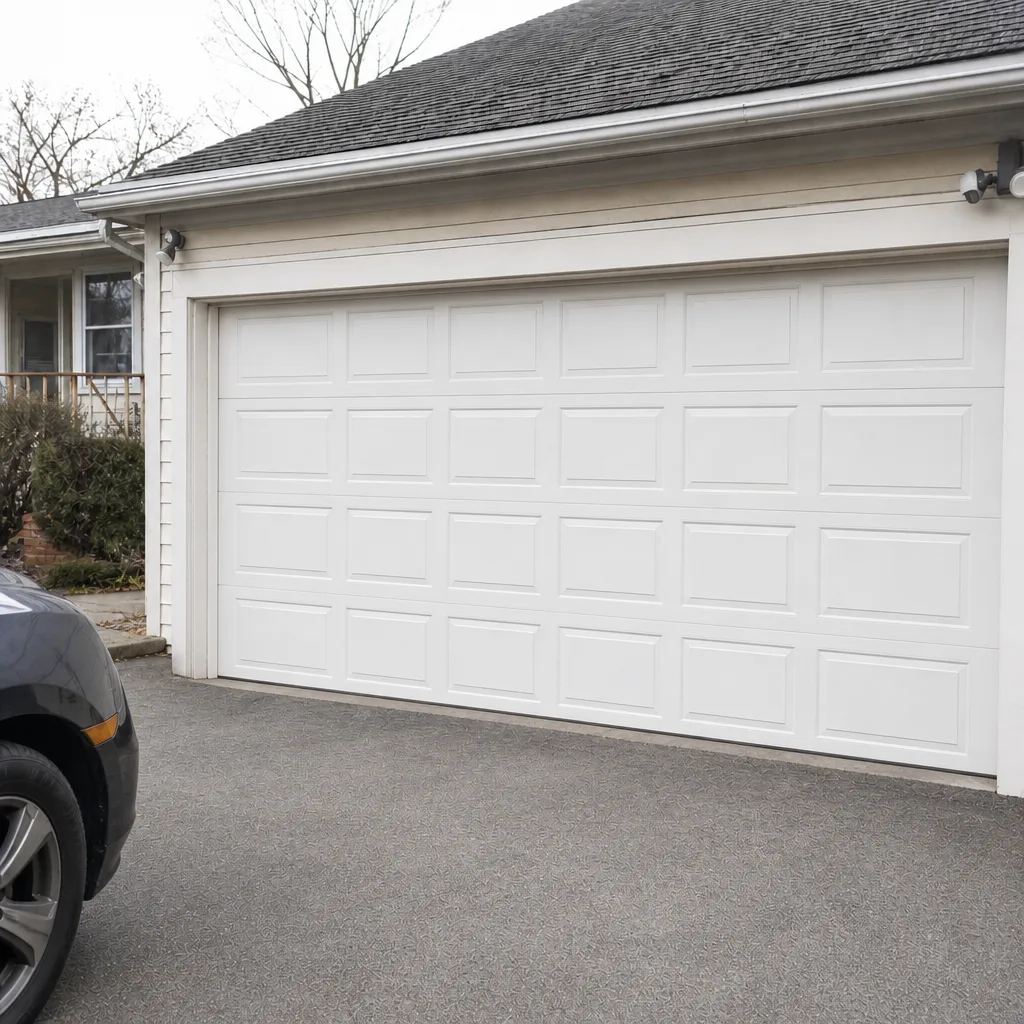 After
When to Call a Professional
Call a professional if the door is out of level, if you hear popping, if the door reverses or stalls, if a cable looks slack, or if the door won’t stay up when lifted. Call for a spring repair even if the door still opens – a weakened spring is a safety issue, not a convenience one. Call if the perimeter shows daylight or if the door has been sitting through a Taunton winter and hasn’t been checked. And call if the timing baseline has shifted and stayed shifted for a few cycles. Those are the cases where a small repair now beats an emergency repair later. Taunton Garage Door Repair Co offers free estimates in Taunton – call (844) 491-7235.
Frequently Asked Questions
The most common garage door warning signs are a door that opens slower than its baseline, grinding or popping sounds during travel, uneven gaps at the corners, a door that reverses or stalls, and worn weather seals around the perimeter. Any one of these on its own is worth checking; two or more together is a strong signal that something is failing.
A spring that’s about to break usually shows up as a door that feels heavier than it used to, a door that hangs slightly out of level, or a popping sound from the spring area. Do not test it by hand under a loaded door. Call a technician and let them run a safe diagnostic; spring repair is not a DIY job.
Taunton’s freeze-thaw winters and humid summers do accelerate wear on springs, seals, and tracks compared with more stable climates. The temperature swings expand and contract the metal, stiffen rubber seals in winter, and swell wood components in summer. A seasonal check in late fall and early spring catches most of that wear before it becomes a repair.
Twice a year is a reasonable rhythm: once before winter and once in early spring. Between checks, the timing baseline method takes under a minute and will flag changes before they become failures. If you’ve never had the door checked, a single diagnostic visit will establish a baseline you can compare against.
Not necessarily. A strained opener is often responding to a door problem, especially a spring that’s lost tension or rollers that have stiffened. Replacing the opener without fixing the door will usually lead to a second failure. Have the door and opener diagnosed together before deciding.
Yes. Emergency garage door service is a core offering, not an upsell, so a stuck door, a broken spring, or a door that won’t close is exactly the kind of call we take seriously. Call (844) 491-7235 for a free estimate, and if it’s urgent, say so and we’ll book it accordingly.
The Bottom Line
Garage door failures leave warnings, and the warnings are small: a second of extra travel time, a new grind at the top of the open cycle, a one-inch tilt at one corner, a strip of daylight under the bottom seal. The skill worth building as a homeowner in Taunton is separating those small signals from ordinary noise. Run the timing baseline. Run the asymmetry test. Listen to the four sounds and know which ones are urgent. Look at the perimeter, not just the door. And when something falls into the “call now” column, call now. Our technicians have up to 14 years of experience and work on eight major brands, from LiftMaster and Chamberlain to Clopay, Amarr, Wayne Dalton, Craftsman, and Raynor, so a diagnosis is rarely a guess. For a free estimate, call Taunton Garage Door Repair Co at (844) 491-7235.
Written by the team at Taunton Garage Door Repair Co.