Top Signs You Need Garage Door Service – Don’t Ignore These
A garage door that’s slightly slower than it used to be isn’t just old – it’s telling you that spring tension has dropped enough that the opener motor is compensating, and that motor is now running hotter and closer to burnout than it should. The warning signs that come before a full garage door failure are consistent and predictable, but most homeowners read them as normal aging instead of mechanical signals with a specific timeline. This post reframes those signs as diagnostic data. If you’d rather not climb around the door with a flashlight, call (844) 491-7235 and we’ll take a look.
Key Takeaways
- Sounds, speed changes, and visual wear are clues with different urgency levels – not all “normal aging.”
- A door that moves easily by hand but fights the opener is often a spring losing tension, not a failing motor.
- One worn roller left alone can lead to track damage, cable stress, and a spring failure down the line.
- Grinding, a loud pop, or rhythmic clicking during travel are the sounds that mean stop and call a technician.
What sounds are normal, and which ones mean call a technician today?
Minor roller noise is normal. Grinding during travel, a loud pop, or rhythmic clicking are not, and they’re the audio equivalent of a check-engine light you shouldn’t clear and forget. Here’s how to tell them apart in Taunton homes, where temperature swings through the year put real stress on steel hardware.
- Minor roller noise: A light rumble or squeak as the door travels is usually dry rollers or a hinge that wants a drop of lubricant. Annoying, not urgent. A little attention now keeps it that way.
- Grinding during travel: A metal-on-metal scrape usually points to a worn roller, a bent track, or a bearing chewing itself up. It gets worse, not better, so treat it as a same-week call. Left alone, grinding is one of the fastest paths to a bigger repair.
- A loud pop: This is often a torsion spring snapping. If you hear it, stop using the door. Springs are dangerous – leave them to a trained technician, because a door under spring tension can injure someone who doesn’t know how to release it safely.
- Rhythmic clicking: Often a loose chain or belt in the opener, or a worn sprocket. It’s a signal that the opener is working harder than it should, which is worth a look before it strands you.
In our experience, the homeowners who call on the “grinding but still opening” stage almost always end up with a cheaper repair than the ones who wait for the pop. Our technicians have up to 14 years of experience reading exactly these sounds, and on door and opener brands like Genie and Chamberlain they know what each one points to.
Why is my garage door moving slower than it used to?
Slow operation has three common causes with three different urgency levels, and only one of them is a simple lube fix. That’s why “my door just got old” is a risky conclusion. Taunton’s changing seasons make this one worth reading carefully.
- Dry rollers and hinges (low urgency): Friction from unlubricated metal slows the door slightly and makes it noisier. A proper lubrication of rollers, hinges, and the track can restore smooth travel. This is the case where a little maintenance genuinely helps.
- Opener force settings out of adjustment (medium urgency): If the opener is set to push too hard or too soft, the door can move unevenly or hesitate. This is a sign the opener is compensating for something – often mechanical drag – rather than a firmware quirk.
- Spring tension dropping (high urgency): A torsion or extension spring that has lost tension makes the opener do work the spring should be doing. The door slows, the motor runs hotter and longer, and you’re closer to a failure than you realize. This one doesn’t fix itself with grease.
Cold snaps and humid stretches both change how a door feels. If your door is noticeably slower in the colder months, that’s a clue pointing at tension and friction, not a coincidence.
My door works fine by hand but struggles with the opener – what does that mean?
It usually means the spring is on its way out, not that the opener is failing. This is the sign homeowners most often misread, and it’s an early spring-failure warning worth taking seriously.
Here’s the logic. A balanced door should feel fairly light when you lift it by hand, because the springs are holding most of the weight. If that’s still true but the opener strains, hesitates, or stops partway, the opener is working against a spring that’s lost some of its lift. Replacing the opener in that situation is a common and expensive mistake – you’d install a new motor that would then fight the same underlying spring problem.
Manual tests carry real risk, so don’t force anything and don’t put your hands near the springs, cables, or bottom brackets. If a door feels heavy or won’t stay put when you lift it partway, stop and call. Spring replacement is a job for a trained technician, and it’s worth treating garage door spring repair as the priority over a new opener. Whatever brand is on your door – Genie, Clopay, Amarr, Wayne Dalton, and others we work on every day – the diagnosis starts in the same place: the springs and the balance, not the motor.
What visual checks do most homeowners never do?
Cable fraying, a spring gap, roller wear, and bottom bracket cracks are the four checks most people skip, and each one is easy to read once you know what you’re looking at. These are visual inspections only – look, don’t touch, because cables and springs are under tension.
- Cable fraying: The lift cables run along the sides of the door and should look smooth and clean. A frayed, kinked, or rusted cable with broken strands means the cable is weakening and could snap. Don’t handle it. That’s a call.
- Spring gap: On a torsion spring (the one across the top), a visible gap or a clear separation in the coil means the spring has broken. If the gap is there, the door is unsafe to operate until a technician deals with it.
- Roller wear: Look at the rollers in the track and the hinges they sit in. Flat-spotted, cracked, or very loose rollers cause drag and grinding. This is the single most ignored part in the whole system, and the cheapest to swap.
- Bottom bracket cracks: The bracket at the bottom corner holds the cable. A crack or bend there is a sign the door is under stress it shouldn’t be. This is a safety-critical part – never try to adjust it yourself.
These four checks take two minutes and tell you more than any guesswork. For a Taunton homeowner, spotting a gap or a frayed cable early is the difference between a small repair and a stranded car in the driveway.
How does one small problem turn into a big repair? (The cascade)
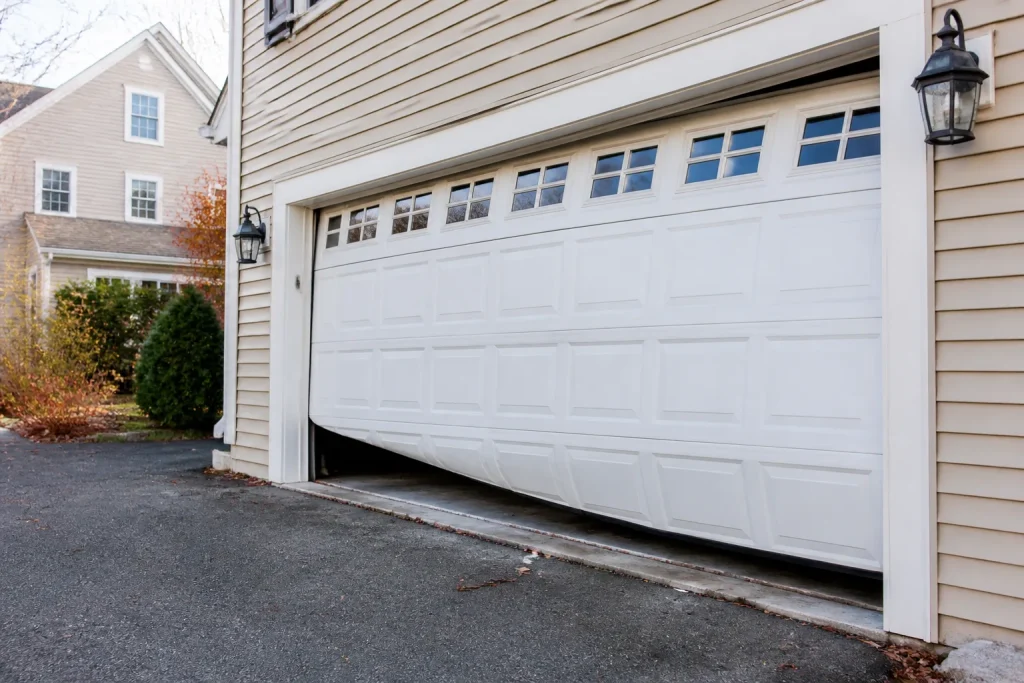
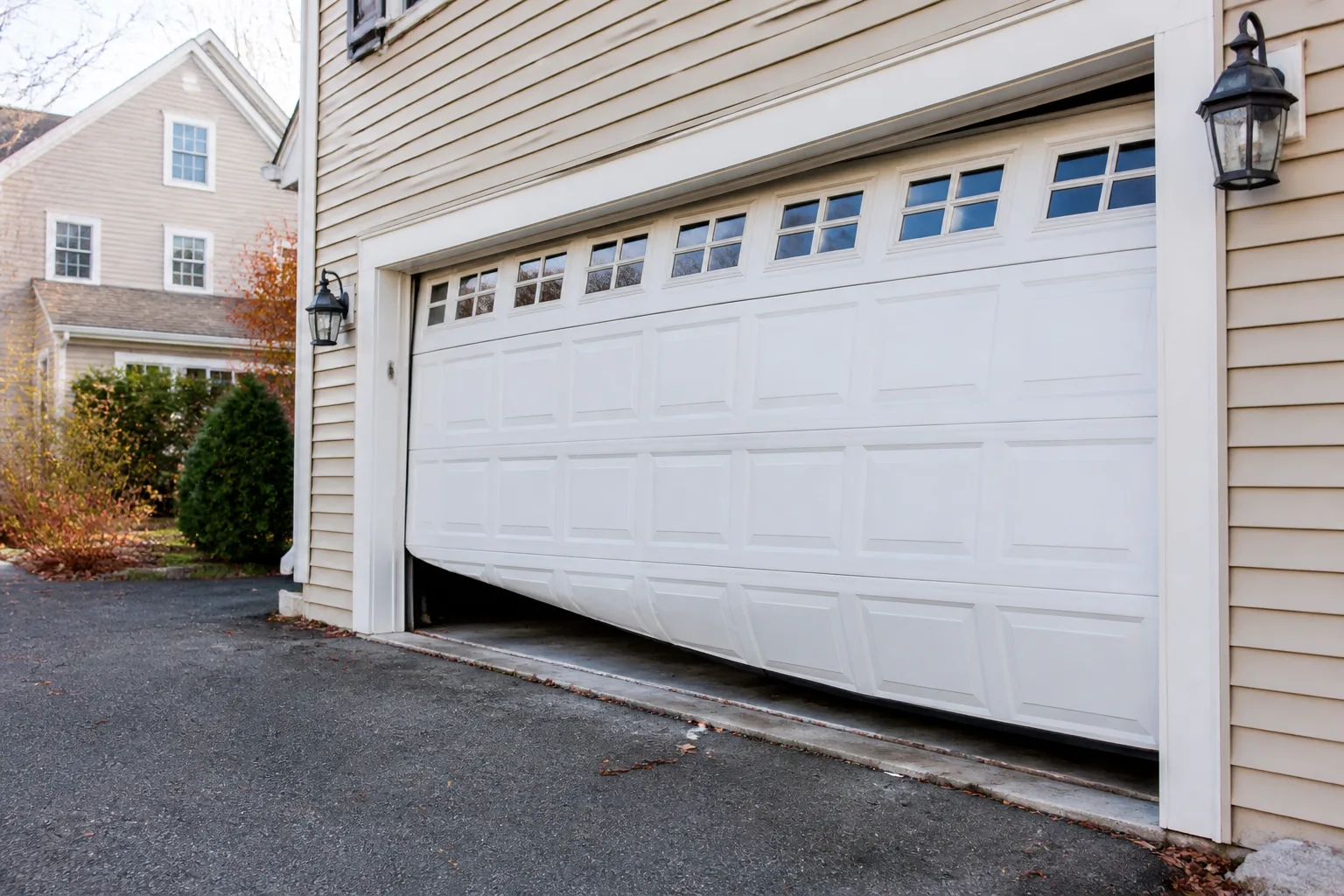
Ignoring a worn roller can lead to track damage, which adds stress to the cables, which can cascade into a spring failure – and the price climbs at each delayed step. This pattern is one of the most consistent things we see, and it’s why we treat minor signs as early signals rather than cosmetics.
- Step 1 – Worn roller: The door drags and grinds, loading the track unevenly. A roller and hinge set is a modest, quick fix at this stage.
- Step 2 – Track damage: Persistent uneven load bends or loosens the track, so now you’re looking at track realignment or replacement. Bigger, and avoidable.
- Step 3 – Cable stress: A misaligned door puts extra strain on the cables, accelerating the fraying you saw in the earlier check. Now a cable is at risk.
- Step 4 – Spring failure: All that added drag and stress lands on the springs, and one day the pop happens. Now it’s a spring repair plus anything the failing door pulled out of alignment.
Each step costs more than the one before, and none of them have to happen. If you’d rather stop the cascade early, our garage door repair service is built for exactly this – catching the small signal before it turns into a big job. For opener-side symptoms like a motor that hesitates or a remote that no longer responds, garage door opener repair digs into the operator itself.
When should you call a pro instead of waiting?
Call a pro the moment you hear grinding, see a spring gap, find a frayed cable, or notice the door struggling with the opener. Those aren’t inconveniences to tolerate – they’re a timeline. Springs and cables store enormous energy, and a door that’s out of balance can come down hard. We handle springs and cables as a trained task precisely because DIY on those parts is genuinely dangerous.
There’s also the scenario nobody plans for: the door won’t open and the car is trapped inside. If the door has popped, jammed, or quit mid-travel in Taunton, that’s an emergency garage door call, and emergency service is a core part of what we do rather than an upsell. We’re trained and experienced across eight major brands – LiftMaster, Chamberlain, Genie, Clopay, Amarr, Wayne Dalton, Craftsman, and Raynor – so whatever brand is on your door, we know the parts and the failure patterns.
Related services in Taunton
Not sure whether you’re looking at a door problem or an opener problem? Our technicians service both the door (panels, tracks, springs, cables) and the operator under one call, so the diagnosis doesn’t get handed to a generalist halfway through. The fix comes from one specialist, and you get a straight answer on what’s normal wear and what’s urgent.
The Bottom Line
The warnings before a failure are consistent: grinding during travel, a pop, rhythmic clicking, slow operation with an opener that’s fighting the springs, and visual clues like frayed cables, a spring gap, worn rollers, or a cracked bottom bracket. Each one is diagnostic data with its own timeline – not “normal aging.” Catching them early prevents the cascade from roller to track to cable to spring, and it prevents the scary version of a garage door failure, where the door quits with your car behind it.
If you’re in Taunton and need help, Taunton Garage Door Repair Co offers free estimates – call (844) 491-7235. We’ll tell you which signs are wear and which ones are urgent, and quote before any work starts so there are no surprises. Back in service today, whenever that’s possible for your door.
Frequently Asked Questions
The main signs are grinding during travel, a loud pop, rhythmic clicking, the door moving slower than usual, the door working by hand but fighting the opener, and visible problems like frayed cables, a spring gap, worn rollers, or a cracked bottom bracket. Grinding, a pop, and a spring gap are the urgent ones – call a technician rather than operating the door. Call (844) 491-7235 for a free estimate in Taunton.
Usually one of three causes: dry rollers and hinges (a lube fix), opener force settings out of adjustment, or a spring that has lost tension and is letting the motor do the lift. Of those, the spring tension case is the urgent one, and it’s the one that doesn’t clear up on its own. If your door is slow and the opener sounds strained, call (844) 491-7235 for a free estimate.
Yes, through a cascade. A worn roller makes the door drag and loads the track unevenly, which stresses the cables, which lands extra strain on the springs – and eventually the spring fails. Each step costs more than the last, so fixing the roller early is the cheap move. Call (844) 491-7235 and we’ll assess where you are on that timeline.
It often is. A loud pop usually means a torsion spring has snapped, and the door should be left closed and left alone until a technician gets there. Don’t force it open or try to release the door yourself, because the spring is under heavy tension and springs are dangerous. Call (844) 491-7235 if you’re in Taunton and we’ll get it sorted with a free estimate.
Written by the team at Taunton Garage Door Repair Co.
Need Garage Door Help?
Call Taunton Garage Door Repair Co - the local pro we connect you with is licensed and insured, here with fast after-hours help in Taunton.
(844) 491-7235