Last updated November 22, 2026
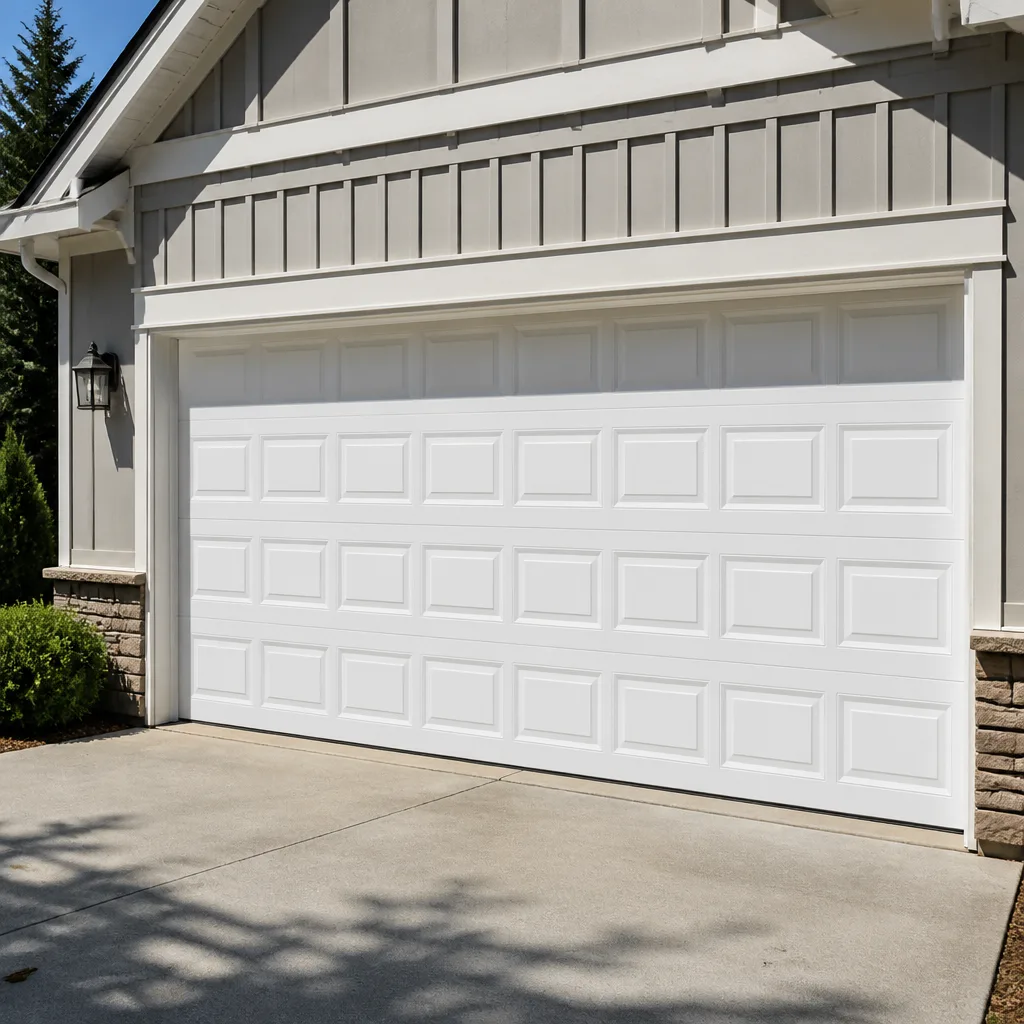 Raised-panel steel
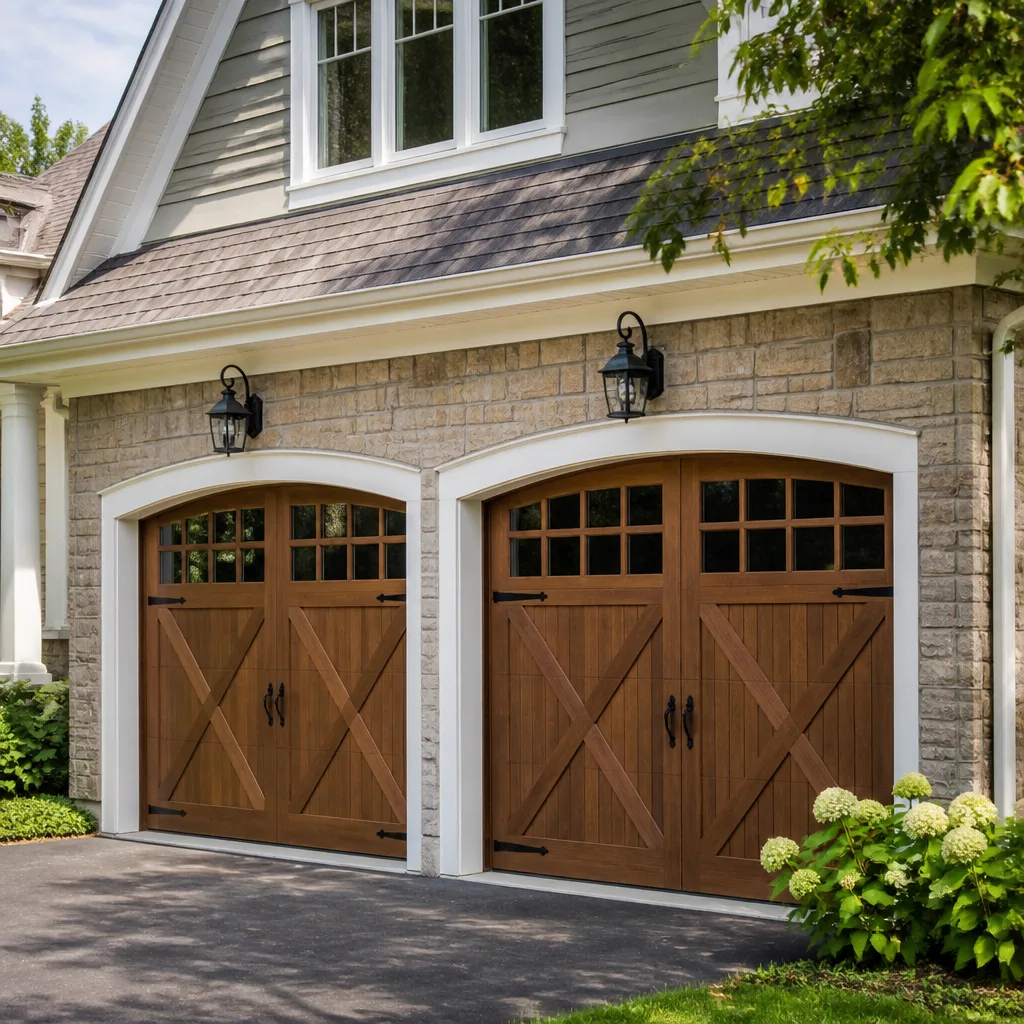 Carriage house
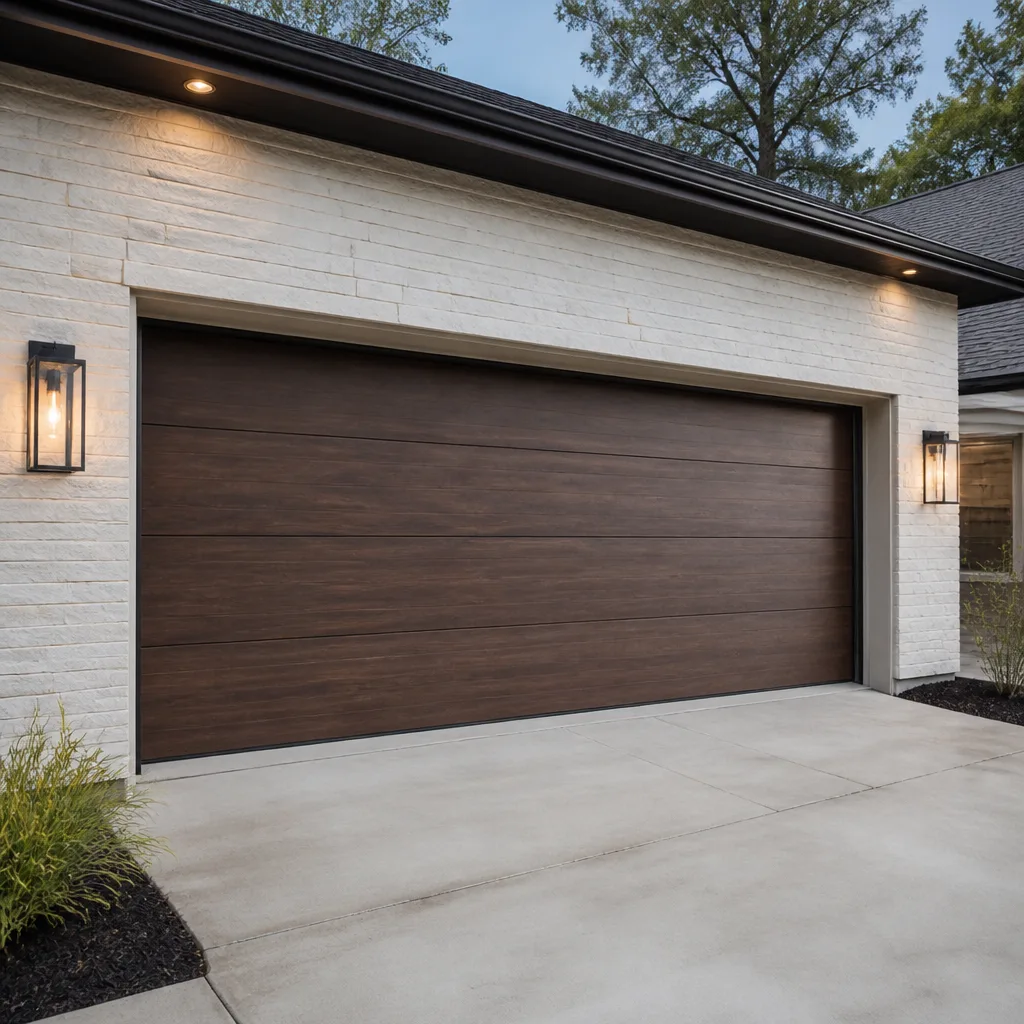 Modern flush
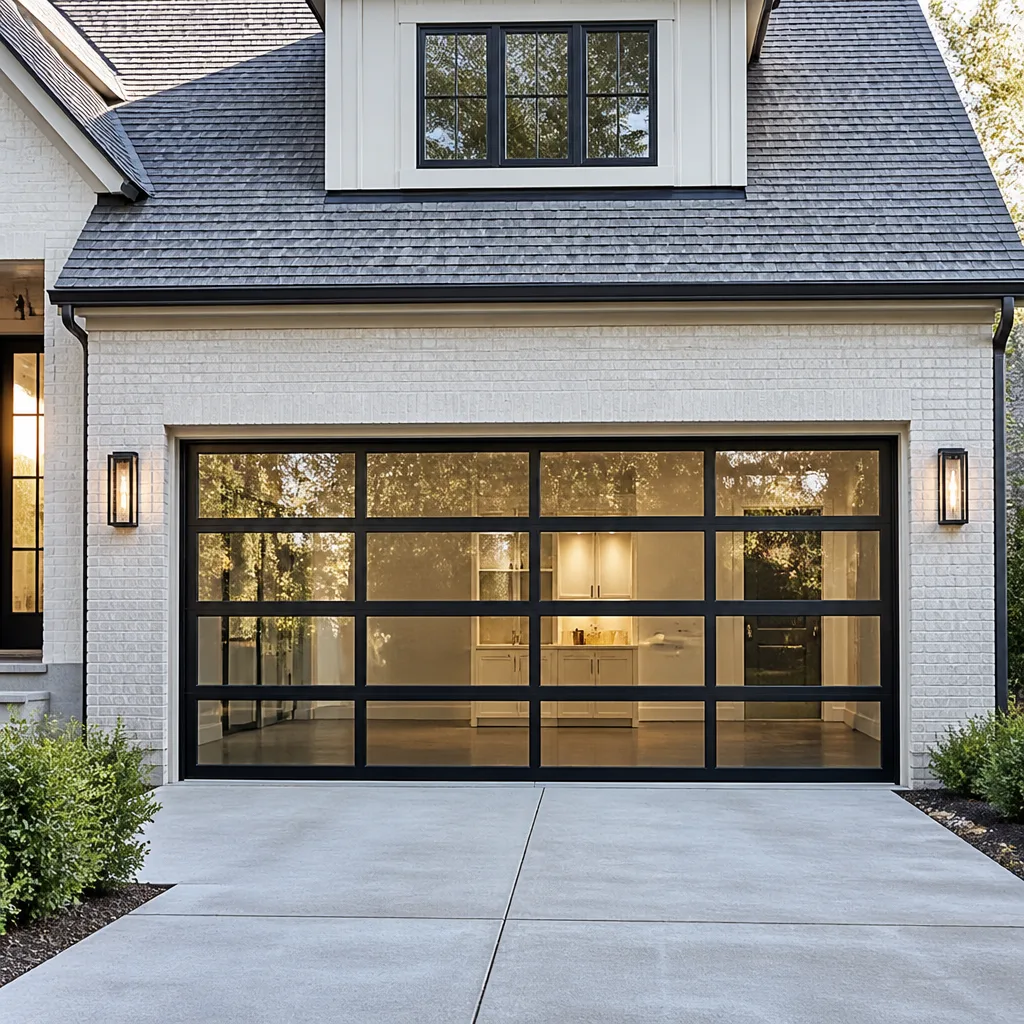 Full-view glass
 LiftMaster openers
 Chamberlain openers
Full 25-point door and opener safety check with every visit - springs, cables, rollers, tracks, and your LiftMaster or Chamberlain opener included
You get a price before we start. It does not change when the pro arrives.
Get your free estimateGarage Door Permits, Codes & Inspections in Taunton, MA: What You Need to Know
Most homeowners in Taunton assume that replacing a garage door is a no-permit job. And most of the time they’re right. Like-for-like replacement of a residential garage door usually doesn’t require a building permit in Massachusetts. But “usually” is doing a lot of work in that sentence, and the exceptions are where people get into trouble: a structural header gets modified, a new opener lands on a dedicated circuit, an attached garage needs a fire-rated door, and suddenly the job that felt routine falls under a different set of rules. The confusing part is that none of this is posted clearly in one place.
We’re writing this guide because we get the question constantly, and because permit rules sit right next to the work we do every day. This is our read on when a garage door project in Taunton needs a permit, when it doesn’t, what an inspection actually looks at, and how the paper trail protects you when you sell. It’s general guidance, not legal advice: your Taunton building department has the final say on any specific job, and we’ll point you to them where it matters.
Quick Answer
In most cases, replacing a garage door with a like-for-like unit of the same size and same opening does not require a building permit in Taunton, and swapping an opener that plugs into an existing outlet doesn’t either. A permit is typically triggered when you change the structure of the opening (widening it, altering or replacing the header), install a new dedicated electrical circuit for a smart opener or an EV-ready outlet in the garage, or work on the fire-rated door between an attached garage and the house. When in doubt, call the Taunton Building Department before you order anything; the answer usually takes one phone call.
Styles & brands we work with
- Raised-panel steel
- Carriage house
- Modern flush
- Full-view glass
- LiftMaster openers
- Chamberlain openers
Table of Contents
- When does a garage door project need a Taunton permit?
- What counts as an exempt like-for-like replacement?
- Electrical sub-permits: openers, circuits and garage power
- Fire-rated doors for attached garages
- Pulling the permit yourself vs. hiring a licensed contractor
- What an inspection actually checks
- Insurance and resale: the paper trail that protects you
- Common mistakes to avoid
When does a garage door project need a Taunton permit?
The line isn’t about the door itself. It’s about whether you’re changing the building. A door that goes back into the same opening, same dimensions, same track arrangement, doesn’t alter the structure of the house, so it usually doesn’t trigger a permit. A project that changes the opening, adds a circuit, or touches the separation between the garage and the living space is a different story.
In Taunton, the framing here comes from the Massachusetts building code, known as 780 CMR, which is what the local building department enforces. The code distinguishes between ordinary repair and replacement (which is generally exempt) and work that modifies the structure or mechanical systems (which isn’t). Here’s how that plays out for the types of jobs we see most often:
- Like-for-like replacement of a sectional door, same size and same opening: usually no permit.
- New door in an existing opening where the opening itself changes (widening, raising the headroom, moving the track): a structural change, so expect a permit.
- Header work of any kind: almost always permit territory. The header carries the load above the opening, and the building department wants to see it.
- New electrical circuit for an opener, smart garage unit or EV-ready outlet: the electrical work itself needs a sub-permit, separate from any building permit.
- Fire-rated door between an attached garage and the house: replacement may need a permit depending on the scope and what the inspector wants to verify.
- Detached garage: fewer rules apply, since there’s no dwelling on the other side of the wall. Structural changes still need a permit; the fire separation requirements generally don’t come into play.
The pattern to remember: if the work changes something the house’s structure depends on, or adds a system the house didn’t have, assume you need a permit. If you’re just swapping one door for another in the same hole, you probably don’t. If you’re unsure, that one phone call to the building department saves far more hassle than it costs. When we’re quoting a replacement in Taunton, we ask about the opening up front so the answer is clear before anything is ordered.
What counts as an exempt like-for-like replacement?
A like-for-like replacement means the new door matches the old door on the essential dimensions: the width and height of the opening, the way the door mounts to the track, and the type of door (sectional, one-piece, roll-up). If all four of those stay the same, the project is generally treated as ordinary maintenance rather than new construction, and a building permit isn’t required.
“Like-for-like” doesn’t mean the door has to look identical. A homeowner in Taunton can swap a tired steel door for a nicer Clopay or Amarr in the same size, upgrade the insulation, or choose a different color, and the permit picture usually doesn’t change. What matters to the building department is that the opening and structure don’t move. That’s also why some replacements do need a permit even though they feel routine:
- You’re replacing a single door with a wider door, so the framing has to change.
- You’re raising the door’s headroom to fit a taller sectional, which involves the header and the track.
- You’re adding a second door where a wall used to be, or closing off an opening.
- You’re switching a garage door for something with a different structural requirement, like a roll-up replacing a sectional.
For a straightforward replacement in a Taunton neighborhood like Whittenton or the East Taunton area, the most common scenario is a single or double sectional door going into the same opening it came out of. Those are typically exempt. If you’re not sure your replacement is truly like-for-like, describe the dimensions and the door type to the building department and they’ll tell you. We also flag this during the free measure, so you know whether a permit is likely to come up before you commit to a door.
Electrical sub-permits: openers, circuits and garage power
Here’s the one that surprises people. Replacing a garage door opener that plugs into an existing wall outlet is usually ordinary electrical work with no permit. But if your new opener needs something the garage doesn’t already have, like a dedicated 20-amp circuit for a smart opener or a wall-mounted unit with more draw, the electrical work falls under the electrical code, and that generally requires an electrical sub-permit pulled by a licensed electrician. That’s a separate permit from any building permit, pulled by a different trade.
Why does this matter to a garage door company? Because the opener is a big part of the job, and we can’t wire the circuit ourselves. Our technicians work on LiftMaster, Genie and Chamberlain systems every day and know exactly what these units need, but the electrical run belongs to a licensed electrician. What we do is make sure the opener install itself sits cleanly on top of whatever electrical setup the electrician leaves behind.
If you’re the person adding an EV charger or any additional outlet in the garage, the same rule applies: the electrical work needs an electrical permit, and the electrician pulls it. The garage door side of the project is separate. In practice, that means two calls, not one, and two inspection steps if the building department is involved. Booking the electrician first and the opener install second keeps the schedule clean. Get in touch for the door and opener side and we’ll tell you what needs to be lined up before we arrive; our garage door opener repair page covers how opener jobs typically go when the wiring is already in place.
What about a new opener on an existing circuit?
If your current opener already has a dedicated circuit and a properly placed outlet, swapping the opener for a comparable model is straightforward. The new unit plugs in, the mounting and safe-t close safety reversal setup gets verified, and there’s no electrical sub-permit in the picture. That’s the common case, and it’s why most opener replacements in Taunton don’t create a permit story at all.
Fire-rated doors for attached garages
If your garage is attached to the house, the door between the two is treated differently from the exterior garage door. It’s part of the fire separation: the wall, the door and the ceiling of an attached garage are built to be a barrier, so fire can’t move from the garage into the living space as quickly. Under Massachusetts residential code, an attached garage is required to have a door between the garage and the house that provides that fire separation. Which doors qualify depends on the door’s construction and its rating, and the only reliable way to verify it is to check the door’s own label and confirm the requirement with your local building department.
Two practical points follow from that:
- If a door between the house and the garage is being replaced, the new door has to meet the same fire-separation requirement as the one it replaces. A standard hollow-core door is not the right choice here.
- If you’re replacing a door and don’t know its rating, don’t guess. Look for the label on the door, and if it’s gone, ask the Taunton building department what they expect for your house. They’ll tell you what they want to see.
This is worth knowing even if you’re only replacing the exterior garage door, because the two often get considered together during a sale or an inspection. The attached-garage fire door is the piece most likely to be flagged by a buyer’s inspector, and fixing it before listing is far easier than negotiating it after an offer.
Pulling the permit yourself vs. hiring a licensed contractor
Massachusetts allows homeowners to pull some permits themselves for work on their own home. That’s a legitimate option in Taunton, and it saves a step if the scope is small. But a homeowner-pulled permit comes with strings: you’re the one responsible for the work being done to code, and you’re the one who has to schedule and be present for the inspection.
When a licensed contractor pulls the permit, the picture is simpler. The contractor is the named party on the permit and is responsible for the inspection. If someone has to fix a problem, it’s their call to make and their cost to absorb. For structural or electrical work, most homeowners in Taunton prefer that arrangement, and most contractors who handle that scope will pull their own permits as a matter of course. Our work on doors, openers and springs is generally below the permit line, but when a job does need a permit, we tell the homeowner in writing during the quote.
Here’s the step-by-step for the homeowner-pulled route, since it’s the one people ask about:
- Call the Taunton Building Department and describe the work: what’s changing, door dimensions, whether electrical is involved.
- Ask what documents they want: plans, a sketch, product specs. For a door replacement, sometimes just the dimensions and the door’s spec sheet.
- Fill out the permit application and pay the fee. Fees for residential work are usually modest, but ask for the current amount rather than assuming.
- Do the work, or have it done, and confirm the inspection requirements the department gives you.
- Schedule the inspection once the work is finished and have the signed-off permit on hand afterward. The signed permit is the document that matters down the road.
One caution worth stating clearly: spring, cable and track work behind a heavy door is genuinely dangerous, and a homeowner-pulled permit does not make that work safe to do without training. A garage door spring under tension can cause serious injury in an instant. If a job involves the torsion or extension springs, the cables or the track, that part belongs to a trained technician regardless of who pulled the permit. Our garage door spring repair page explains what that work involves, and we’re happy to talk it through before you decide.
What an inspection actually checks
An inspection isn’t a beauty contest. The inspector is there to confirm the work is what the permit said it would be, that it’s structurally sound, and that it meets the code the permit was issued under. For a garage door project, the things they look at depend on the scope, but these are the common ones:
- Structural changes: if the header or framing was modified, the inspector checks it’s sized and installed as shown on the application.
- Attachments and anchoring: the track and the spring system are fastened properly to the framing, not to drywall alone.
- Dimensional match: the installed door matches the dimensions and product on the permit.
- Electrical: for a sub-permit, the circuit is properly run, grounded and protected.
- Fire separation: on a door between an attached garage and the house, the door and its frame meet the separation requirement.
- Safety features: the photo-eyes at the bottom of the track and the auto-reverse function on the opener are working, which is a common-sense check the inspector confirms along with the rest.
In our experience, most garage door inspections in Taunton go smoothly when the permit application was accurate and the work matched it. Problems happen when the application says one thing and the install is another, or when a permit is pulled and then the scope quietly changes mid-job. If that happens, tell the building department before the inspection, not after.
Insurance and resale: the paper trail that protects you
Here’s the part nobody thinks about until it’s too late. Permits aren’t just a municipal formality. They’re the record that says “this work was done, and someone qualified confirmed it met code.” When a garage door-related issue ever turns into an insurance claim, or when you’re selling a Taunton home, that record is what stands between you and a very uncomfortable conversation.
On a sale, the buyer’s home inspector will look at the garage. They’ll note what they see, and a smart buyer’s agent will pull the permit history at the town. An unpermitted structural or electrical change shows up as a question mark, and questions marks add days to closing or turn into price negotiations. A signed-off permit removes that question mark entirely. On the insurance side, a claim involving a garage door, an opener or an electrical system is easier to resolve when the paper trail exists. Whether your policy responds to a particular event is your insurer’s call, but a record of permitted, inspected work only ever helps.
That extends to the small stuff, too. When you replace a door or an opener, keep the manufacturer’s documentation and the final invoice. If you ever sell the house or file a claim, having the specs on hand settles arguments about what was installed and when. Our technicians work on doors, openers and springs as a single-trade specialist, so we can document what we installed, brand and model, without you chasing it down later.
The one-page file you should keep
- The permit application and the signed permit, if one was required.
- The inspection report with the inspector’s signature.
- The product spec sheet for the door or opener.
- The final invoice showing what was installed.
- The manufacturer’s warranty documentation.
That’s the file a future buyer or an adjuster will want. It takes ten minutes to put together and it answers every question before it’s asked.
Common Mistakes to Avoid
- Assuming every garage door swap needs a permit. Most like-for-like replacements don’t, and pulling a permit you don’t need just adds cost and time. Confirm the scope with the Taunton building department so you’re not paying for a step that doesn’t apply.
- Assuming no garage door project ever needs a permit. The other side of the same coin. If the header, the opening or the electrical is changing, assume you need a permit until the town tells you otherwise.
- Adding a new circuit for a smart opener without talking to an electrician first. A 20-amp dedicated circuit is electrical work. Skipping the electrical permit leaves the installation technically outside the record, which is a mess to sort at resale.
- Swapping the fire door between the garage and the house for a cheap standard door. That door is part of the fire separation for an attached garage in Taunton. Replacing it with a non-rated door is a safety and code problem even though the job feels routine.
- Pulling a permit and then changing the scope mid-job. If the plan changes after the permit is issued, call the building department before the inspection. A permit that no longer matches the work causes delays that are avoidable.
- Losing the paperwork once the work is done. The signed permit, inspection report and final invoice are the evidence a buyer’s agent or an insurer will ask for. Keep them in one place.
- Attempting spring or cable work yourself behind a homeowner-pulled permit. A permit doesn’t reduce the risk. Garage door springs are under enormous tension and can cause serious injury. That’s a trained-technician job no matter who pulled the permit.
See the difference
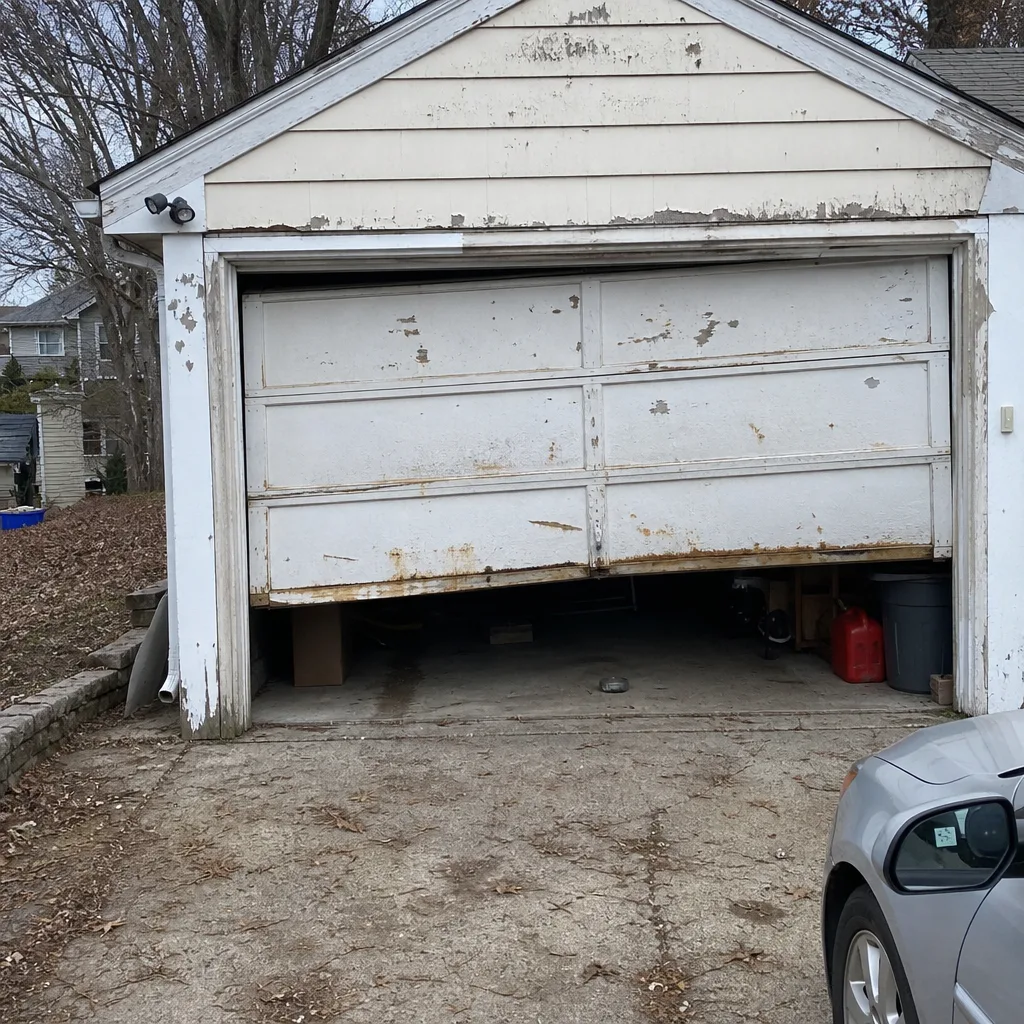 Before
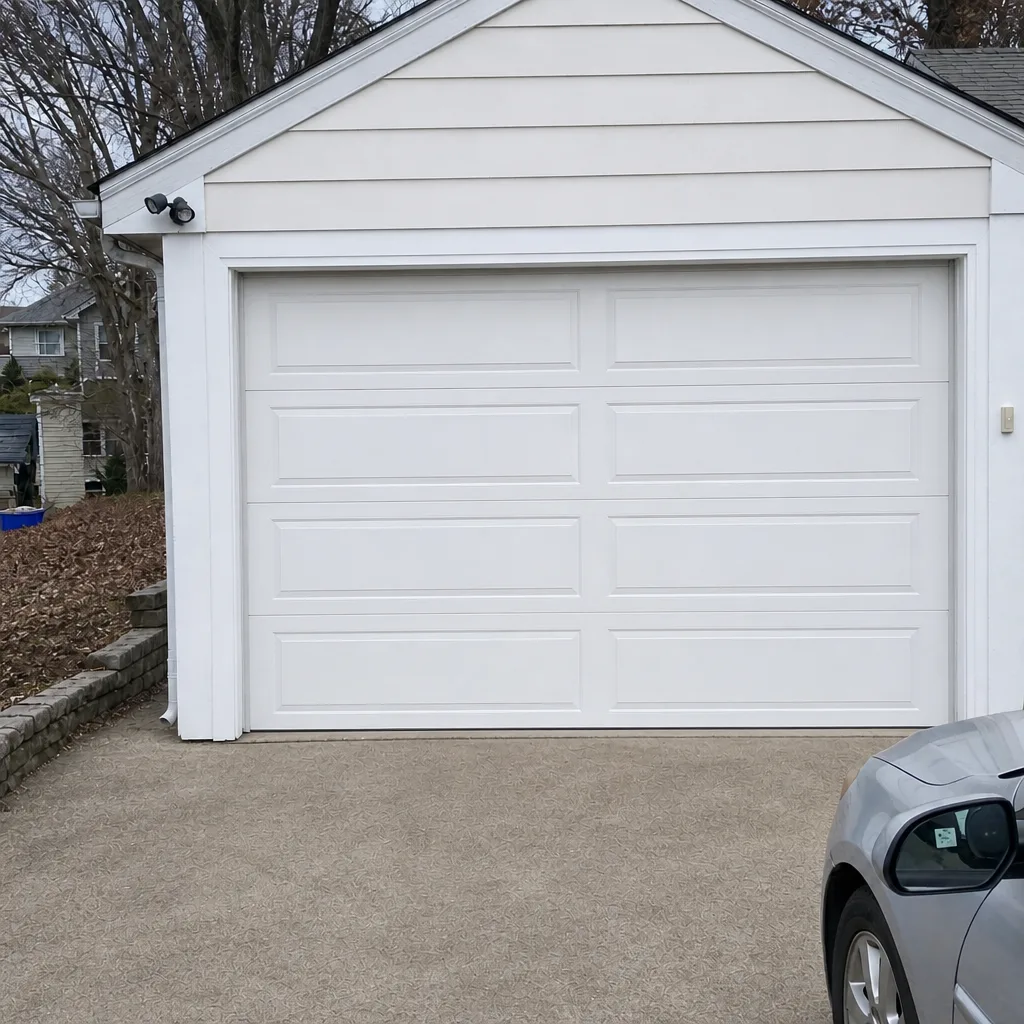 After
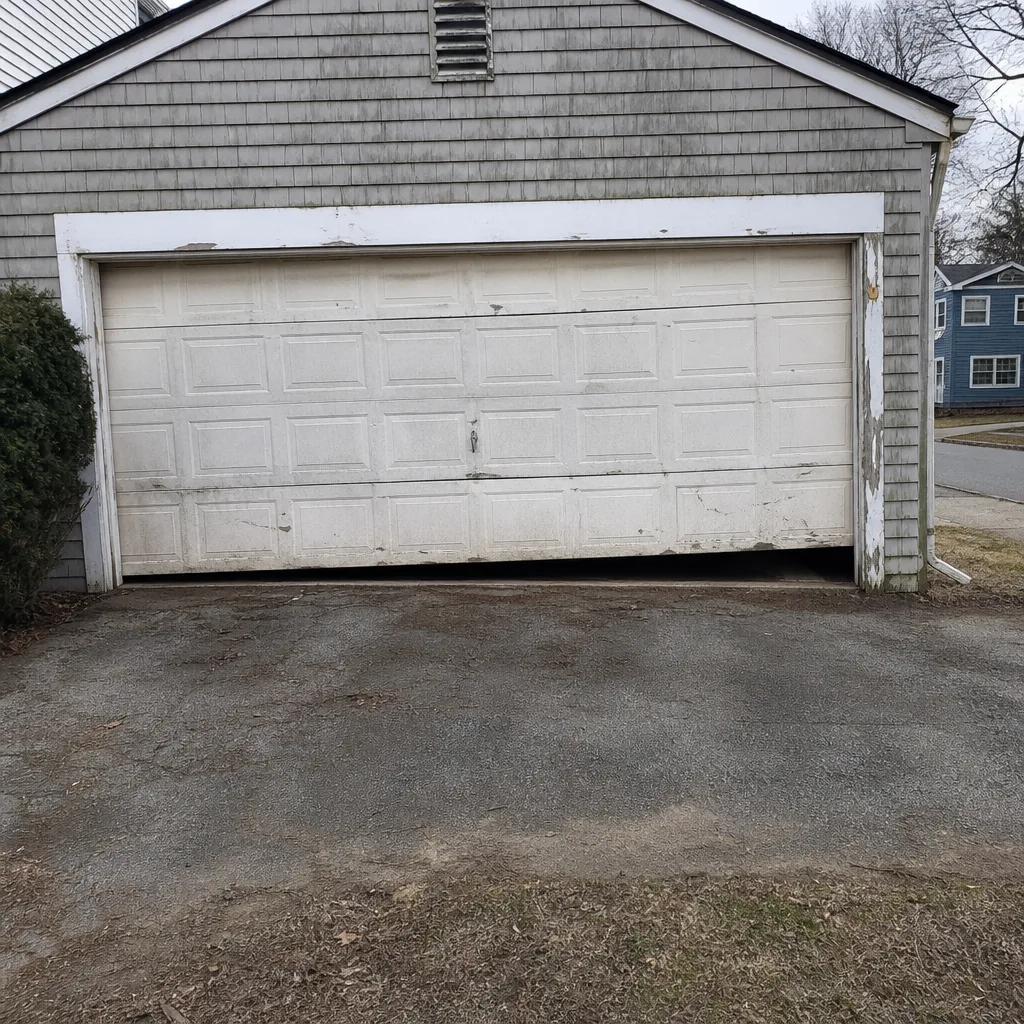 Before
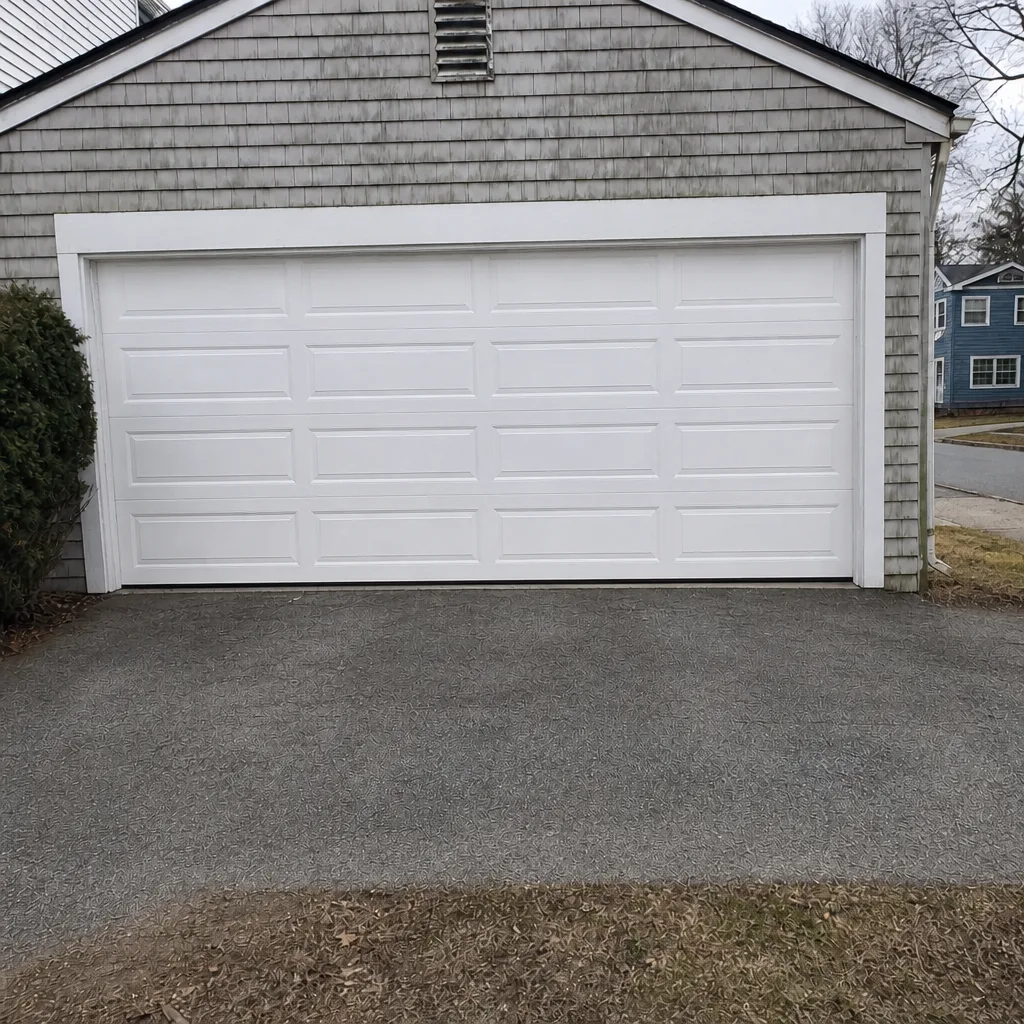 After
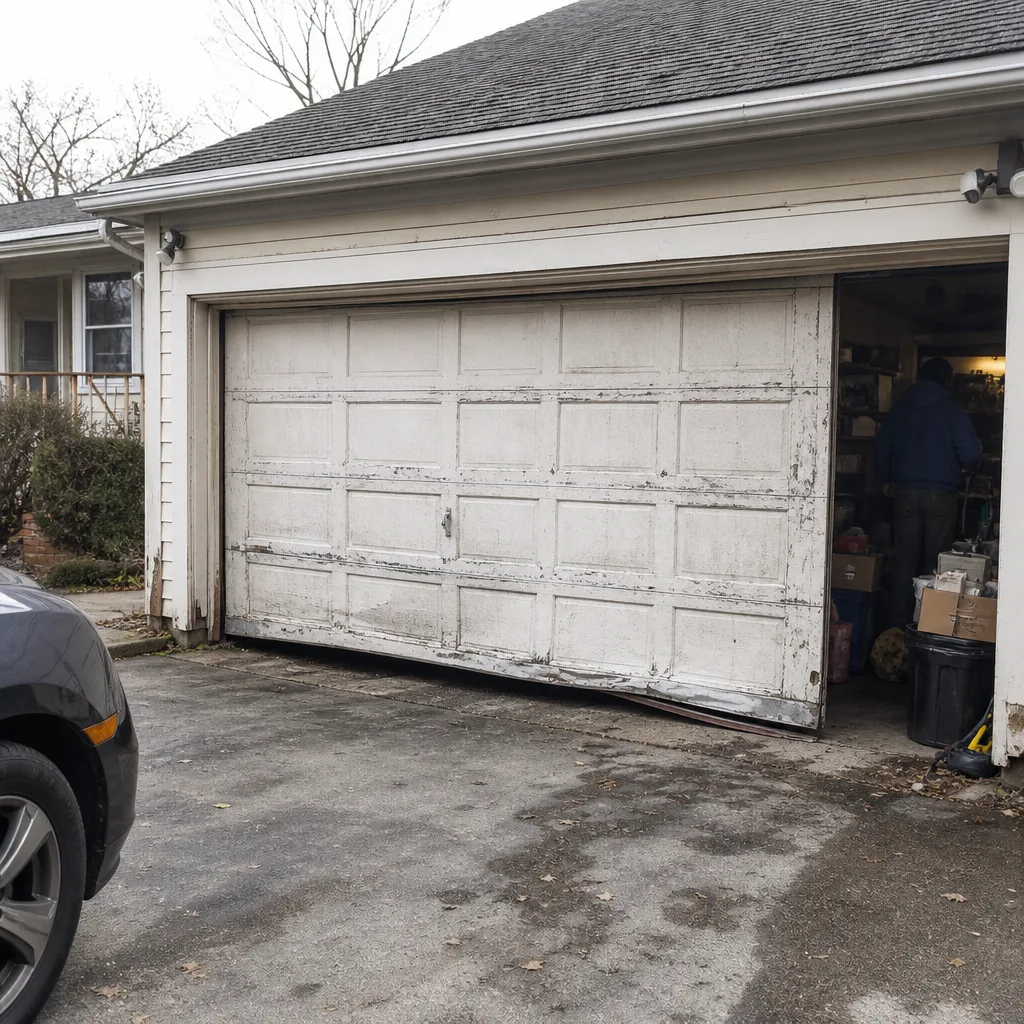 Before
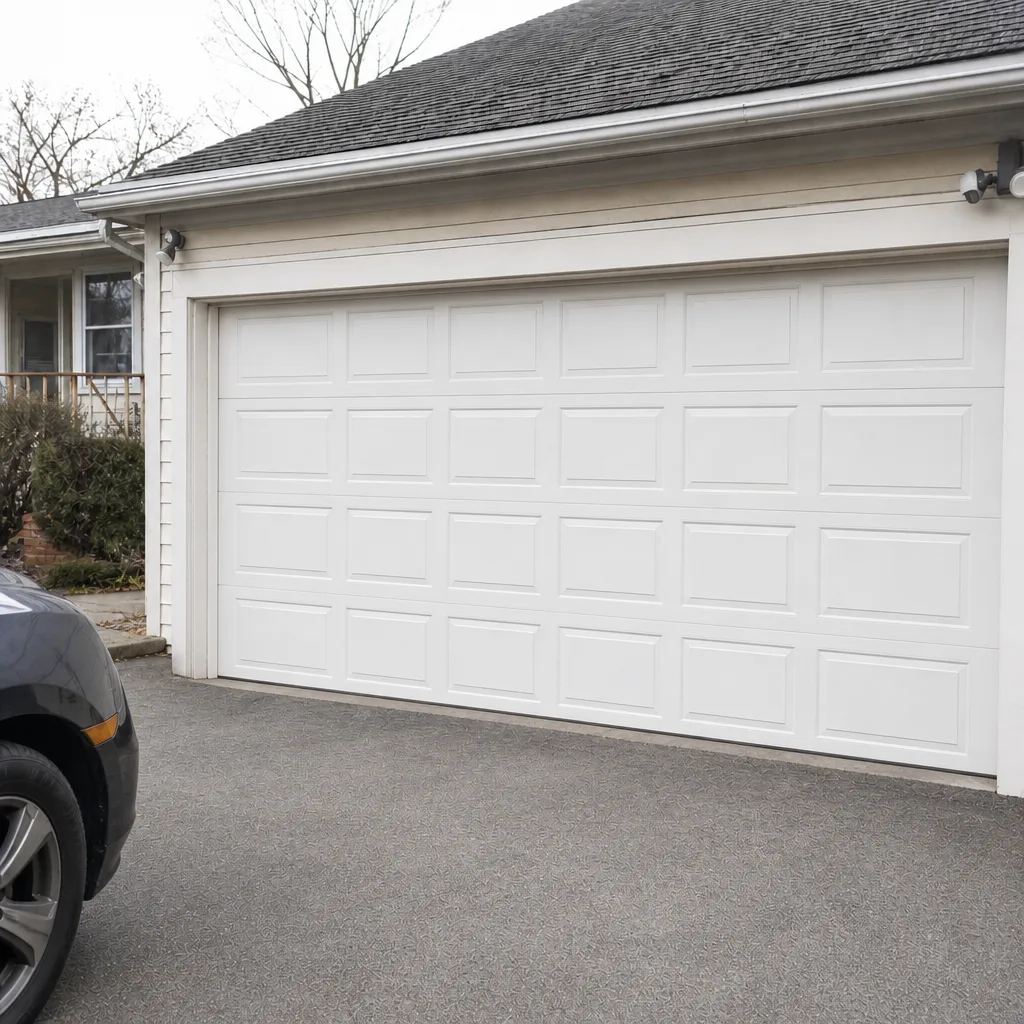 After
When to Call a Professional
Some of this guide is about paperwork, and some of it is about the door itself. Call a professional for anything involving the springs, the cables, the track alignment or the opener’s wiring, and for any installation where the door’s mounting or safety features will be touched. Call sooner if a door is off its track, a spring looks stretched or broken across the middle, or an opener is reversing unexpectedly. Our technicians have up to 14 years of experience on doors and openers of every type, and we work on Clopay, Amarr, Wayne Dalton and the rest of the big brands every day. As a garage door specialist, we don’t hand off a half-diagnosed job to a generalist. Taunton Garage Door Repair Co offers free estimates in Taunton; call (844) 491-7235 and we’ll walk through what the job involves.
Frequently Asked Questions
Usually not, if the replacement is like-for-like: same opening, same dimensions, same door type. A permit is typically required when the opening or header changes, or when the project involves new electrical work or the fire-rated door between an attached garage and the house. Confirm with the Taunton Building Department before you order, and call (844) 491-7235 if you want a second set of eyes on the plan.
It depends on the wiring. If the opener plugs into an existing dedicated outlet, an electrical permit usually isn’t needed. If a new circuit is added (for a smart opener or an EV-ready garage), a licensed electrician needs to pull an electrical sub-permit for the wiring. The opener install itself is separate. Call (844) 491-7235 and we’ll help you figure out which side of that line your project is on.
A building permit covers structural or construction work, such as changing the opening or the header. An electrical sub-permit covers the electrical run and is pulled by a licensed electrician. For a garage job that touches both, you may need both permits, pulled by two different parties. Call (844) 491-7235 and we’ll point you to the right starting question for the town.
Yes. An attached garage is a fire separation from the house, and the door between them is required to provide that separation. Which doors qualify depends on the door’s construction and its rating, and the exact requirement is something the local building department will confirm for your house. Call (844) 491-7235 if you’re replacing that door and want to get the specification right before ordering.
It can. During a sale, the buyer’s inspector will look at the garage, and an agent may pull the town’s permit history. An unpermitted structural or electrical change shows up as a question, which adds days to closing or turns into a price negotiation. A signed-off permit removes the question. Call (844) 491-7235 if you want to get the paperwork checked before you list.
Massachusetts allows homeowners to pull some permits for work on their own home, and you’re responsible for the work being done to code and for scheduling and attending the inspection. For anything involving springs, cables or track, though, the work belongs to a trained technician regardless of who pulled the permit. Garage door springs are under heavy tension and can cause serious injury. Call (844) 491-7235 and we’ll help you decide which parts are safe to handle and which aren’t.
The Bottom Line
Most garage door replacements in Taunton don’t require a permit, and most opener swaps don’t either. The cases that do require one are specific: structural work on the opening or the header, a new dedicated circuit for a smart opener or an EV-ready outlet, or work on the fire-rated door between an attached garage and the house. Confirm the scope with the Taunton Building Department, keep the signed permit and the inspection report with your home’s records, and treat any spring, cable or track work as a trained-technician job. The paperwork is simpler than most homeowners fear; the key is knowing which side of the line your project falls on before you order the door.
If you’re comparing options for a garage door repair or replacement in Taunton, Taunton Garage Door Repair Co is a dedicated garage door specialist. We work on every major brand and every stage of the door’s life, from a broken spring to an opener upgrade to a new installation. Call (844) 491-7235 for a free estimate and we’ll help you sort out what your project actually needs, paperwork included. You can also learn more about Taunton Garage Door Repair Co and the full range of services we offer.
Written by the team at Taunton Garage Door Repair Co.